Imagine that your key metrics suddenly drop, and your team spends hours digging through static dashboards, trying to understand why. By the time you find the answer, the problem has already damaged your business.
That’s exactly why more companies are switching to AI agents, autonomous “digital analysts” that monitor data 24/7, detect anomalies in real-time, and suggest solutions without waiting for your questions. The numbers speak for themselves: enterprise data volumes will exceed 394 zettabytes by 2028, and according to Gartner, 50% of business decisions will be automated or augmented by AI agents by 2027. This raises a critical question: should you invest in AI agents for data analytics, and how do you do it right?
With AI agent development as one of our core expertise areas, we at 8allocate know that agent-driven analytics is becoming the new default. We help enterprises build AI agent solutions across industries, such as AI for EdTech and Education, FinTech, Logistics, and more. In this piece, we’ll explore what AI agents for data analysis are, how they work, their types, and market use cases.
TL;DR: AI Agents for Data Analysis
- AI agents for data analysis are autonomous “digital analysts” that monitor data analysis 24/7, detect problems, investigate causes, and deliver insights with no human prompts needed.
- Traditional BI tools and AI copilots wait for you to ask the right question. AI agents ask the questions for you, investigate automatically, and deliver answers with action plans.
- Companies see big wins from AI agents in analytics: AES cut audit time from 14 days to 1 hour, achieving 99% cost savings, while Suzano gave 50,000 employees instant data access, enabling 95% faster queries.
- By 2027, 50% of business decisions will use AI agents, according to Gartner. Companies that adopt now gain a crucial competitive advantage in decision speed.
- In analytics, you can deploy AI agents in four main formats: chat-based agents (self-service), background agents (24/7 monitoring), single agents (specific workflows), or multi-agent systems (end-to-end operations).
- In 2026, data analytics is moving beyond BI tools that show what happened. With AI agents, it becomes “tell me what’s changing, what’s likely next, and what to do about it.” Adopt this shift early, or competitors will outpace you in decision speed.
What Are AI Agents for Data Analysis?
AI agents for data analytics are autonomous software programs that continuously monitor your business data, detect problems, investigate root causes, and deliver actionable insights without human prompts.
Here’s how they differ from what you know. Most AI tools like ChatGPT are reactive; you ask a question, they give an answer, and that’s it. AI agents are proactive; they receive a business goal like “monitor customer retention” and work continuously in the background, planning investigations, connecting to databases, and analyzing patterns without waiting for your input.
The autonomy is what differentiates AI agents from simple chatbots or static dashboards. A chatbot or traditional analytic tool will give you an answer if you ask the exact right question. An AI agent strives to identify the questions to ask, explore the data, and deliver proactive insights even before you formulate a query. In short, agentic analytics means your analytics process itself becomes intelligent and adaptive, not just the models underneath.
Traditional BI vs AI-assisted vs Agentic analytics
The fundamental difference is who takes initiative and drives the data analysis process. Let’s break down how analytics has evolved:
- Traditional BI. Data analysis specialists spot an issue, pull reports, and spend days digging through dashboards and SQL. Slow, human-driven, backward-looking.
- AI-assisted analytics. AI copilots speed things up by suggesting queries, building charts, surfacing trends, but people still drive the investigation step by step.
- Agentic analytics. An AI agent data analysis system is basically an analyst on autopilot. You set KPIs, define “something’s off” signals, and create monitoring rules. Agent analytics monitor 24/7, investigate across systems, and deliver summaries with action plans.
| Criteria | Traditional BI tools | AI-Assisted Analytics | Agentic Analytics |
| Who drives the investigation | Human-led | Human-led + AI suggestions | Agent-led (detects plus investigates) |
| Time-to-decision | Days | Hours to minutes (with review) | Minutes (for defined signals) |
| Analyst effort per insight | High | Medium (grunt work reduced) | Low (humans handle exceptions) |
| Trust & auditability | High (SQL/BI lineage) | Medium (needs sources/SQL) | High required (logs and evidence) |
| Production operations & risk | Low-medium complexity | Medium (quality and cost monitoring) | High (guardrails, monitoring, approvals) |
At 8allocate, we’ve seen how slow human-driven analytics can get in practice. One of our FinTech clients spent 2-3 days weekly triaging fraud signals across dashboards and reports. After we introduced an agentic layer, triage dropped from 2 days to 10 minutes, with 35% fewer false positives at the same detection rate. This is a practical example of how AI agents upgrade enterprise data analysis.
The difference between traditional BI and agentic systems is proactive autonomy versus reactive manual effort. This explains why 66% of organizations implementing AI agents report measurable productivity gains. Teams prevent problems before they escalate into costly issues.
Key Advantages of AI Agents for Data Analysis
With the AI agents market growing 24x by 2033 compared to 2025 and 88% of executives increasing AI-related budgets, AI agents represent the future of enterprise analytics. Now let’s break down why it may be worth considering AI agents for data analysis.
Less “hunt and peck,” more answers
Agents don’t wait for someone to ask the next question, they watch your key metrics and dig in as soon as something looks off.
Faster “what happened?” and “why?”
Instead of your team jumping between dashboards, SQL, and logs, an analytics agent follows a playbook (check X, compare Y, segment by Z) and comes back with the likely cause and supporting evidence.
Better consistency (same playbook every time)
Different people investigate in different ways. AI agents follow the same checklist every time, so you don’t depend on “who’s looking at it” or their personal habits. Thus, the outcomes are more reliable and easier to audit. But, this level of consistency relies on solid data management and analytics practices, so agent behavior stays predictable and transparent.
Agents can trigger safe next steps
With guardrails, agents can open a ticket, notify the right owner, attach the charts/queries, and track resolution, so insights turn into action, not “another alert someone ignores.
To benefit from AI agents for data analysis, roll them out where they clearly save time or prevent expensive mistakes, like anomaly triage or repetitive investigations. Otherwise, you’ll automate work that doesn’t move the needle and end up with an “agent” nobody uses.
AI agents aren’t a guaranteed advantage just because they’re trendy. The value starts when you’re clear on the problem you solve, what ‘better’ looks like, and how you’ll measure the impact.
Oleg Popov, AI Solutions Architect at 8allocate
How AI Agents Work in Data Analysis
Here’s how AI agents operate when they analyze your data.
1. Understanding business intent
The agent receives an input, for example, “revenue dropped 10% today” or a scheduled trigger. It figures out what to know or achieve using natural language processing.
2. Dynamic task planning
Then, the AI agent data analysis system breaks the problem into smaller tasks and creates a game plan on the fly, adapting as new information comes in.
3. Connecting to data and tools
Agent connects to your data sources (data warehouses, databases, logs, even external APIs) to gather information needed for each task. Then, they might generate SQL to query a database, run models , or call an API for external data. As a result, agents perform tasks like a human analyst but at machine speed.
4. Self-checking work
The agent monitors intermediate results for anomalies or errors and adjusts automatically. If something’s off, it tries different approaches, fetches an alternate data source, or if limits are reached, escalate to a human with an explanation.
5. Delivering answers
The agent assembles the findings into a deliverable output: it could be an interactive dashboard updated in real-time, a plain narrative of key insights, an anomaly alert, or even an automatic action. You get decision-ready insights with context: which data was used, confidence levels, and recommended actions.
| Data Analysis Lifecycle Stage | How AI Agents Improve Analytics | Technical Execution |
| Discovery | Quickly scans data, flags unusual changes, and points to where to dig deeper | Multi-modal agent setup combining statistical analysis tools with pattern-detection capabilities |
| Hypothesis framing | Suggests “what might be driving this” using business context and past learnings | LLM-based reasoning enriched with domain knowledge and statistical/analytical logic |
| Analysis execution | Gathers evidence: constructs queries, comparisons, segmentations, prepares graphs and tables | Code-generating agents wired to analytics libraries and visualization tooling |
| Validation | Checks results before anyone acts: sanity checks, cross-source verification, confidence level | Validation agents using statistical checks supported by robust testing frameworks |
| Insight extraction | Turns findings into clear business impact with recommended next best actions | Multi-agent system that blends business context with strong communication/summarization abilities |
| Reporting and follow-up | Works like an on-call analyst: monitors KPIs 24/7, investigates signals, updates stakeholders | Reporting agents with natural-language generation plus alerting/notification systems |
Types of AI Agents for Data Analysis
Not all AI agents are alike. It’s useful to distinguish a few categories of agents and deployment patterns when considering them for enterprise analytics.
Interactive agents (chat-based)
These are the “chat layer” on top of your analytics stack. People ask questions (e.g., what changed in churn last week?”), and the agent turns that into the right query, chart, and explanation. These types of agents are best for self-serve analytics, executive Q&A, and quick drill-downs during meetings.
Semi-autonomous agents (background agents)
These agents run in the background and watch the signals you care about. When something looks off, they follow a playbook: check segments, validate freshness, cross-reference related systems, and surface a short “what happened plus likely why” brief. They’re great for 24/7 monitoring and triage, but they must run with guardrails (read-first, approvals for actions, audit logs) so they don’t create accidental changes.
Single-agent systems
This means using one AI agent to handle a workflow from start to finish. Many teams start here because single-agent analytics setups are simpler to build, test, and govern. They work best for self-contained tasks with clear inputs, clear outputs, and a stable playbook. Good examples are producing a weekly KPI brief, running nightly data-quality checks, or preparing a monthly sales pack.
Find out how to structure an AI-enabled product team in 2026 in our full guide.
Multi-agent systems
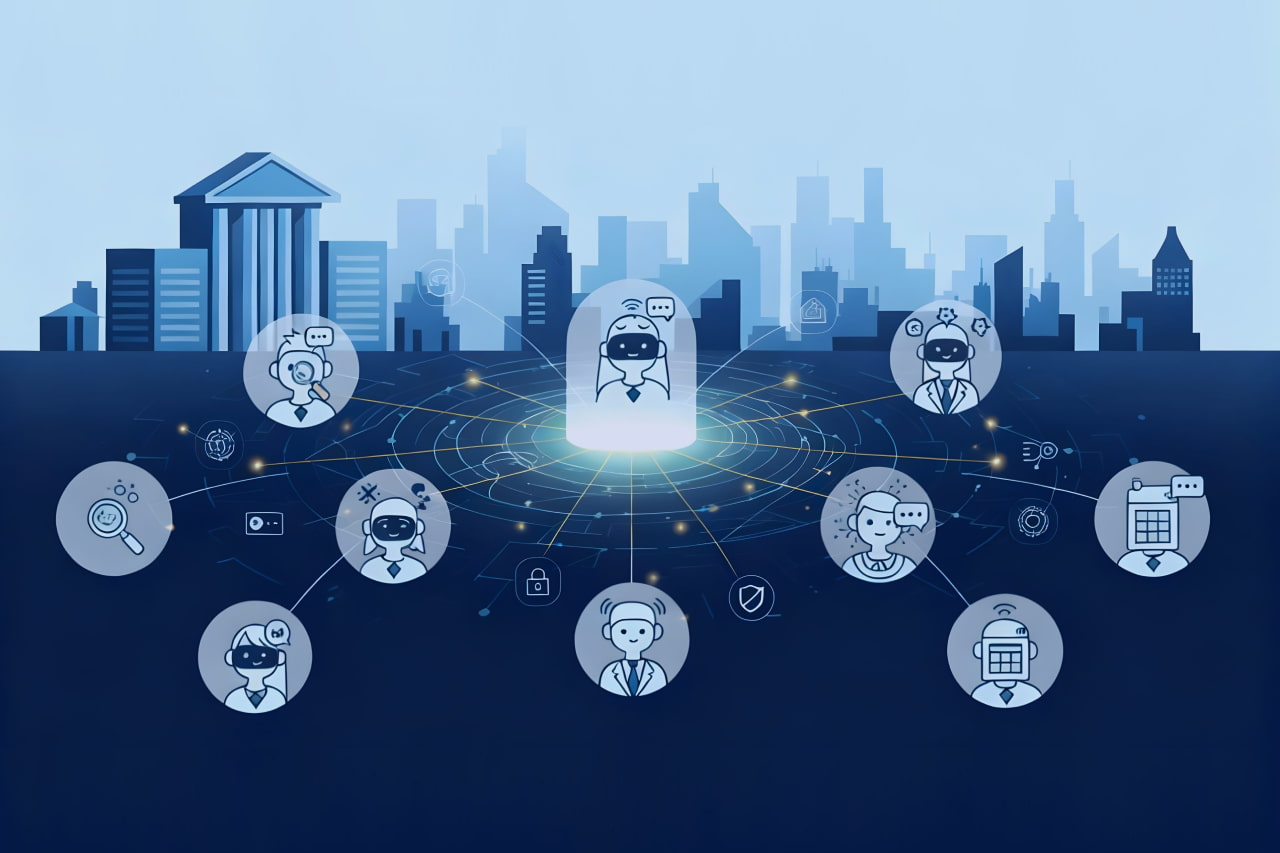
This is when you have a small “team” of agents, each doing what it’s best at, while an orchestrator keeps them in sync. Multi-agent analytics setups shine when workflows are complex and span multiple systems or departments. The trade-off is complexity because you need solid orchestration, shared context, and clear rules so agents don’t duplicate work or contradict each other. That’s why it often makes sense to use AI consulting services from an experienced partner, so you get value faster and avoid costly detours as you scale.
Domain-specific agents
In practice, the best AI agents are tuned to a business domain. A fraud/risk analytics agent checks very different signals and evidence than a marketing performance agent or a data reliability agent. Domain-specific agents are easier to trust because they use the right terminology, the right playbooks, and the right success metrics. This is usually how enterprise teams scale AI adoption. They start with one high-value domain, get it right, then replicate the pattern.
Key Use Cases for AI Agents in Enterprise Analytics
Here are the top use cases where enterprises see the biggest impact from AI agents for data analysis with real examples from Google Cloud’s “1,001 real-world AI use cases” collection.
Real-time KPI monitoring and anomaly detection
Agents continuously watch business metrics and instantly flag unusual patterns before they become costly problems. Here’s a company case in this regard: AES, a global energy company, uses AI agents to automate energy safety audits. The results speak volumes: 99% reduction in audit costs, time reduced from 14 days to 1 hour, and 10-20% increase in accuracy.
Fraud detection and compliance monitoring
Agents learn from transaction patterns to catch fraud and compliance risks in real-time, evolving with new threats to reduce false positives. Here’s a market case: Elanco, a global leader in animal health, processes over 2,500 compliance documents per manufacturing site with AI agents, improving accuracy and preventing up to $1.3 million in productivity impact from outdated information.
Self-service analytics
Business users can query data analysis using plain language. Agents respond with relevant charts and insights, democratizing access to analytics and reducing dependence on data teams. Here’s a case in point: Suzano, the world’s largest pulp manufacturer, deployed AI agents that translate natural language to SQL for 50,000 employees. Result: 95% reduction in query time across the organization.
Automated reports and dashboards
Agents can pull data, apply logic, generate visualizations, and write summaries overnight. Analysts are freed from repetitive work while leaders get timely, customized reports. Consider the Commerzbank example. Commerzbank, a leading German bank, implemented AI agents to automate client call documentation, freeing financial advisors from manual processes to focus on building client relationships and providing personalized advice.
Additional high-value use cases of AI agents for data analysis include:
- Predictive forecasting
- Root cause analysis
- Behavioral analytics
Implementation Considerations and Challenges
Here are the key things you need to know before starting with AI agents for analytics.
Data quality is everything
This is a basic truth. But in the age of AI agents, it hits harder: bad data leads to bad decisions, just faster. It’s crucial to add data quality checks and keep a clear data catalog agents can rely on as the source of truth. (If you’re building this foundation, here’s a practical guide to AI data governance).
Security and compliance
By design, AI agents can access multiple systems and data sources, which makes AI systems security risks a core implementation concern. Give agents least-privilege access and clear guardrails. Plug them into your existing Identity and Access Management (IAM), and make sure every action is authenticated and logged. In regulated industries, build compliance rules directly into agent behavior (e.g., GDPR, HIPAA, financial reporting). They should automatically mask sensitive data and follow regulatory requirements.
Explainability and control
A black-box agent that behaves unpredictably won’t fly in enterprise settings. Build in human-in-the-loop controls so people can review, override, and fine-tune decisions. For high-stakes actions, have the agent recommend, but require human approval, at least until performance is proven. Make sure the agent shows why it reached an answer, with reasoning traces and links to the source data, so analysts can verify results. For example, at 8allocate, our AI engineers implement allow-listed tools, role-scoped permissions, and human-in-the-loop checkpoints to build trust in the AI agents.
Handling AI limitations
Like any AI solution, AI agents can still hallucinate. You can reduce this by grounding the agent in trusted definitions, using RAG so answers pull from business data sources, and improving behavior with ongoing human feedback. You can start with narrow, well-defined use cases to spot failure modes early. And finally, build a fallback mechanism (this is what we, at 8allocate, always tell our clients). If the agent is unsure, it should hand off to a human expert or a deterministic rule, not guess.
Human-in-the-loop design
Agents change how teams work, so adoption isn’t automatic. Bring teams in early, set clear expectations, and provide simple training. AI agents won’t replace analysts, but they’ll speed them up. So build a clear feedback loop where employees can report bad answers and share improvements.
Final Words
AI agents for data analysis represent a fundamental shift from reactive reporting to proactive intelligence. While traditional analytics tells you what happened, AI agents predict what will happen and automatically take action to optimize outcomes. However, success with AI agents comes down to a thoughtful, targeted approach that meets the specific needs of your business.
At 8allocate, we specialize in AI agents development service across industries like FinTech, EdTech, Logistics, and more. We help mid-sized growth companies and enterprises build AI-based solutions that transform manual processes into autonomous workflows, delivering measurable business impact. With the right strategy in place, you can turn AI agents into powerful assets that deliver immediate value while adapting to future business demands.

Still Got Questions on AI Agents for Data Analysis?
Quick Guide to Common Questions
What is an AI agent in the context of data analytics?
AI agent in the context of data analytics is an autonomous software program that interprets business questions, plans analyses, retrieves data, and delivers actionable insights without constant human guidance. It’s like having a virtual data analyst working 24/7, automatically handling multi-step workflows from problem identification to solution delivery.
How are AI agents different from traditional BI tools or dashboards?
AI agents differ from traditional BI tools in that they are proactive rather than passive. Traditional dashboards show you what happens when you ask, while AI agents continuously monitor data, detect patterns, and automatically alert you with explanations and recommendations. For example, a dashboard shows sales dropped, an analytic AI agent tells you sales dropped, explains why, and suggests what to do next.
What kind of enterprises or industries can benefit most from agentic AI?
Any data-rich enterprise requiring fast decision-making benefits from agent analytics. Key industries include FinTech (fraud detection), EdTech (student analytics), Logistics (supply chain optimization), and Healthcare (compliance monitoring). The key indicator is if your organization has more data streaming in than your team can analyze, AI agents add value by covering that gap 24/7.
Do AI agents replace data analysts and BI teams?
No, AI agents don’t replace data analysts and BI teams, they’re force multipliers. Agents handle routine tasks, such as data preparation, standard queries, and initial reports, while analysts focus on strategic investigations, validation, and business context interpretation. The ideal setup is collaborative, where agents do the heavy lifting, humans provide oversight and creative analysis.
What are the prerequisites to implement AI agents for analytics?
There are 5 key prerequisites to implement AI agents for data analysis:
- Clean, well-governed data that’s integrated and accessible through modern platforms.
- Clear use case with success criteria.
- The right tech expertise, either in-house AI/ML skills or a trusted AI solutions development company.
- Leadership buy-in and team support, since agents will change workflows.
- Access to proven AI capabilities, such as existing ML models and services like OpenAI’s GPT for language understanding.
How do we ensure that AI agents remain compliant and secure, especially in regulated industries?
To ensure agents stay compliant and secure, use a layered security approach. That means you need least-privilege access (RBAC/IAM), full audit logs for every action, data masking/redaction to prevent PII leaks, and human approval for high-risk steps. In regulated industries, involve compliance early and test controls against standards like GDPR, HIPAA, or financial reporting rules. For instance, 8allocate, an AI solutions development company, scales agent’s autonomy in layers to ensure its safety. Each step adds capability only after the agent proves reliable with metrics, testing, and rollback plans.
What is agent analytics?
Agent analytics is the use of AI agents to automate and enhance analytics work. Unlike traditional BI tools or AI copilots that mainly answer questions, an analytics agent can run the workflow end-to-end: pull the right data, analyze it, explain the results, and recommend (or execute) the next step within defined guardrails.
How can I use AI agents for data analysis?
You can use AI agents for data analysis to speed up analysis, reduce manual work, and make insights easier to access across the business. Common ways include the following agent analytics use cases:
- Self-serve “analytics copilot” for teams
- Anomaly detection and investigation
- Root-cause analysis and diagnostics
- Data quality monitoring
- Faster exploratory analysis
- Decision support and recommendations
- Workflow automation based on insights
With so many possible use cases, it’s easy to lose focus. A quick second opinion from an experienced AI partner like 8allocate can help you prioritize the agent use cases for faster ROI.
What are the best AI agents for data analysis?
The best AI agents for data analysis depend on your specific needs and industry. Leading solutions include domain-specific AI agents for fraud detection (financial services), supply chain optimization (logistics), student engagement analytics agent (EdTech), and compliance monitoring (healthcare). The key is choosing AI agents that align with your business objectives and data analysis requirements, rather than generic solutions.