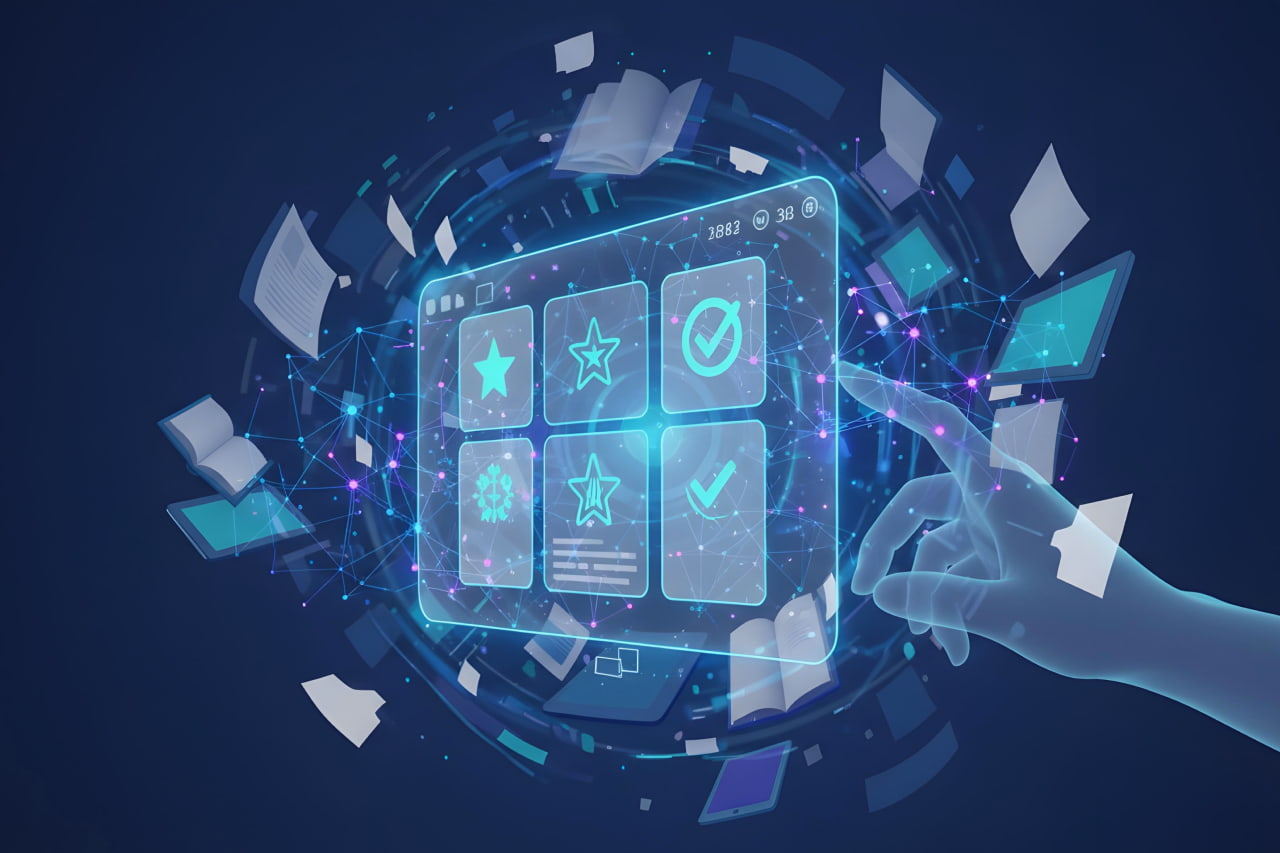
On-Device AI refers to the execution of artificial intelligence models directly on devices rather than relying on cloud servers for processing. This approach offers numerous advantages, such as faster processing times, enhanced privacy, and the ability to deploy AI models efficiently without an internet connection. In this article, we’ll explore what On-Device AI is, its key benefits, and how it is revolutionizing a variety of industries through real-world applications.
Key Takeaways
- On-Device AI enables local data processing, minimizing latency and improving privacy by eliminating the need for data transmission over the internet.
- Key benefits include real-time responses, reduced security risks, and offline functionality, making it ideal for a range of use cases in industries like healthcare, education, and gaming.
- On-Device AI’s versatility allows for applications across diverse sectors, offering personalized, efficient, and highly secure solutions.
What is On-Device AI?
On-Device AI refers to the deployment of AI models that run directly on local hardware, also known as edge devices, instead of relying on cloud-based systems. This enables the device to process data locally, making decisions without having to send information to a central server for analysis. It contrasts with cloud-based AI, which requires constant data transmission to and from external servers, introducing latency and privacy concerns.
This model is increasingly adopted across industries because it offers real-time insights and decisions, especially in scenarios where immediate feedback is crucial. For instance, smartphones and smart home devices now leverage On-Device AI for features like facial recognition, speech processing, and image analysis, all processed locally. The rise of high-performance processors, specialized chips such as Google’s Tensor Processing Units (TPUs), and Apple’s Neural Engine, has further accelerated the adoption of On-Device AI, empowering devices with superior computational abilities.
By processing sensitive data locally, On-Device AI significantly enhances privacy and security, reducing exposure to data breaches and hacking incidents. As the demand for real-time processing grows in fields like autonomous driving, augmented reality (AR), and healthcare diagnostics, the shift to On-Device AI is becoming more pronounced.
Key Benefits of On-Device AI
1. Reduced Latency for Real-Time Responses
One of the standout benefits of On-Device AI is the reduction in latency. By processing data directly on the device, there is no need to send information to the cloud for computation, which cuts down the delay in delivering responses. This is especially critical for applications that require instant reactions, such as voice assistants, augmented reality, or real-time video analysis in autonomous vehicles. The ability to handle data on the spot enhances user experience by delivering faster, more reliable interactions.
For instance, Apple’s Face ID is powered by On-Device AI, allowing the phone to unlock almost instantaneously by processing the facial recognition model directly on the device.
2. Enhanced Privacy and Security
With On-Device AI, sensitive information remains on the device, reducing the risk of data breaches during transmission to external servers. Privacy concerns are a major hurdle for cloud-based AI systems, particularly in healthcare and finance industries where personal and confidential data is involved. By keeping the data local, On-Device AI provides an additional layer of security, giving users more confidence in the integrity of their personal information.
An example of this in practice is Google’s Pixel smartphones, which use On-Device AI to process voice commands locally, ensuring that user data remains private and secure.
3. Offline Functionality
One of the most significant advantages of On-Device AI is its ability to function without requiring an internet connection. Cloud-based AI systems rely on consistent connectivity to process and retrieve data, which can be a limitation in regions with poor network coverage or in scenarios where connectivity is disrupted. On-Device AI eliminates this dependency, enabling devices to operate autonomously even when offline.
This feature is particularly useful in rural healthcare applications, where diagnostic tools powered by AI can still function effectively without needing to access cloud resources, ensuring that care is not interrupted by lack of connectivity.
4. Efficient Resource Utilization
On-Device AI is optimized for running on the device’s available computing resources, such as CPUs, GPUs, or specialized AI accelerators. Understanding CPU compute unit utilization is crucial for efficient resource utilization, particularly during model conversion and integration processes, to achieve faster and more secure inference. This ensures that models are designed to run efficiently without consuming excessive power or memory. The rise of energy-efficient processors and model optimization techniques like pruning and quantization further enhances the performance of AI models on limited-resource devices like smartphones, wearables, and IoT devices.
This capability ensures that even smaller devices with constrained processing power, such as smartwatches, can run AI models effectively. Fitbit’s fitness trackers, for instance, use On-Device AI to monitor heart rate, sleep patterns, and other health metrics without needing continuous cloud connectivity.
AI Models and Technologies
On-device AI is revolutionizing the way we deploy and utilize AI models on edge devices. One of the most exciting advancements in this field is the use of generative AI, which can create new content, such as images, videos, and text, directly on the device. This capability opens up a world of possibilities, from enhancing creative applications to improving user experiences with personalized content.
Various optimization techniques are utilized to ensure the efficient operation of these AI models on edge devices. Model compression reduces the size of AI models without significantly impacting their performance, making them more suitable for devices with limited resources. Pruning involves removing unnecessary parameters from the model, while quantization reduces the precision of the model’s calculations, both of which help in running optimized AI models on-device.
Moreover, on-device AI supports the deployment of deep learning models for tasks like image recognition, natural language processing, and speech recognition. These models can leverage the power of graphics processing units (GPUs) and neural network graph capture to achieve higher on-device performance. We can ensure faster, more reliable, and secure AI-driven functionalities by deploying these optimized models directly on devices.
Applications of On-Device AI
On-Device AI is being adopted across various industries due to its ability to deliver real-time, personalized insights without compromising user privacy. Here are some key sectors benefiting from its implementation:
Healthcare
On-Device AI is playing a transformative role in healthcare by enabling continuous monitoring and diagnostics directly on devices. Wearable devices, such as smartwatches and fitness trackers, use AI to analyze health metrics like heart rate, blood oxygen levels, and sleep quality without the need for internet connectivity.
In cardiac care, AI-driven ECG monitors can detect arrhythmias on-device, alerting patients to potential heart problems in real time. Additionally, AI-powered ultrasound devices can assist doctors by providing instant analysis during medical scans, improving both the speed and accuracy of diagnoses.
Education
In the education sector, On-Device AI is revolutionizing how students learn by providing personalized feedback and support. For example, language learning apps such as Duolingo use On-Device AI to offer immediate corrections and guidance without relying on a server, making it possible for users to practice and learn offline.
This technology also extends to educational tools like AI-powered flashcards and tutoring apps that can adapt to the learner’s pace and knowledge level, delivering a more tailored and effective learning experience.
Gaming
On-Device AI enhances the gaming experience by enabling personalized content delivery, dynamic game adaptation, and real-time decision-making within the game itself. This allows games to adapt based on the player’s actions without needing to rely on cloud-based servers, thus providing a more immersive and responsive gameplay experience.
For instance, AI-driven non-player characters (NPCs) can adapt their behavior and strategies based on the player’s movements, creating more engaging and dynamic gaming environments. The seamless experience provided by On-Device AI allows for faster loading times and uninterrupted gameplay.
Financial Services
In finance, On-Device AI is helping financial apps offer real-time insights and personalized recommendations directly on the user’s device. Virtual assistants powered by On-Device AI can provide users with tailored advice on budgeting, spending habits, and investment opportunities, without the need to send sensitive financial data to cloud servers.
This localized processing significantly enhances security, as sensitive financial data remains encrypted and processed within the device. Additionally, AI fraud detection algorithms can run directly on banking apps to detect suspicious activities in real-time.
Augmented Reality (AR) and Internet of Things (IoT)
On-Device AI enables augmented reality experiences where immediate data processing is essential. Devices equipped with AI capabilities can recognize objects in real time and overlay relevant information, creating a seamless user experience.
In IoT, On-Device AI allows for smarter, more autonomous devices. For example, smart home security cameras can use On-Device AI to detect unusual activity and differentiate between humans, pets, or inanimate objects, minimizing false alarms. In industrial settings, predictive maintenance tools powered by On-Device AI can monitor equipment health and prevent costly breakdowns by analyzing data locally.
Edge Devices and On-Device AI
Edge devices, including smartphones, tablets, and smart home gadgets, are becoming increasingly powerful, enabling them to run sophisticated AI models locally. On-device AI allows these devices to process data directly, reducing the reliance on cloud-based systems and enhancing performance, security, and privacy.
For instance, mobile devices equipped with on-device AI can perform tasks such as computer vision, natural language processing, and predictive analytics without needing to send data to the cloud. This local processing capability not only speeds up response times but also ensures that sensitive information remains secure on the device.
Deploying AI models on edge devices also enables the creation of personalized services and recommendations. Imagine a smartphone that can analyze your daily habits and provide tailored suggestions to improve your productivity or health. By running these AI models on-device, developers can offer more responsive and secure applications that cater to individual user needs.
In summary, on-device AI empowers edge devices to deliver smarter, more personalized experiences while maintaining high levels of security and performance. This technology is paving the way for a new era of intelligent, autonomous devices that can operate efficiently across a wide range of applications.
Deploying AI Models on Edge Devices
Deploying AI models on edge devices comes with its own set of challenges and requires specific considerations to ensure that you can deploy optimized models that run optimally on constrained hardware. The size of the model, the computational power of the device, and the specific use case all play a role in how effectively On-Device AI can be implemented.
Model Optimization
AI models designed for edge devices must be optimized to balance performance with efficiency. To achieve this, it is crucial to run optimized AI models on various edge devices, including smartphones and IoT gadgets. Techniques such as pruning, which eliminates unnecessary parameters, and quantization, which reduces the precision of the model without sacrificing significant accuracy, are commonly used to shrink the model’s size and make it run faster on devices with limited processing power.
Frameworks like TensorFlow Lite and PyTorch Mobile are designed to help developers build lightweight AI models that can run on mobile and embedded devices. These frameworks offer tools for converting and optimizing models for edge deployment, making the process smoother and more efficient.
Hardware Acceleration
Many modern devices are equipped with specialized hardware designed to accelerate AI computations, such as GPUs, TPUs, and Apple’s Neural Engine. Leveraging these hardware accelerators allows AI models to run more efficiently by offloading intensive computations to dedicated processors, freeing up the main CPU for other tasks.
For example, Tesla’s Autopilot system relies heavily on On-Device AI for real-time processing of sensor data, allowing the vehicle to make driving decisions autonomously without depending on cloud connectivity. This is made possible by specialized hardware chips optimized for AI tasks, ensuring rapid, reliable decision-making even in critical situations.
Future Trends in On-Device AI
As On-Device AI technology continues to advance, we are seeing innovations such as large language models being adapted for mobile devices, enabling more sophisticated tasks to be processed locally. This trend will expand the capabilities of smart devices, allowing them to perform complex functions like natural language understanding and generative AI tasks, even without internet access.
In the coming years, expect mobile devices to become more autonomous, performing increasingly complex tasks, from detailed voice commands to advanced image processing, all handled locally. This evolution will further empower users and open up new possibilities for applications in healthcare, finance, education, and beyond.
Why Choose On-Device AI for Your Projects
Adopting On-Device AI offers significant advantages for developers and businesses. Reduced latency, enhanced security, and offline functionality make it a compelling choice for applications that require real-time, reliable performance. Utilizing local resources allows on-device AI to process data more efficiently and provide better user experiences, positioning it as a key technology for future innovation.
For organizations looking to develop AI-powered applications that demand high levels of security, performance, and responsiveness, On-Device AI offers a powerful solution. Whether you are developing in healthcare, finance, or consumer electronics, integrating AI directly onto devices can unlock new levels of efficiency and personalization, ensuring your products are not only cutting-edge but also highly secure.
Summary
On-Device AI represents a pivotal advancement in the field of artificial intelligence, offering faster, more secure, and autonomous processing by running AI models directly on devices. From reducing latency and enhancing privacy to enabling offline functionality, it’s an ideal solution for a broad range of industries, including healthcare, education, gaming, and finance.
With real-world examples showcasing its transformative potential, On-Device AI is set to continue revolutionizing how we interact with technology. As technology evolves, developers and organizations have an opportunity to build more innovative, responsive, and secure applications that meet the ever-growing demands of modern users.
Are you ready to explore the potential of On-Device AI for your projects? Contact us today to learn how we can tailor AI solutions that meet your specific needs and drive your business forward in this rapidly evolving landscape.