FinTech is an industry where data is the main asset that drives informed strategic decisions and fuels growth. From the moment data is collected, it starts its transformative journey from raw numbers to insights. It’s stored, utilized, and analyzed to help FinTech vendors outperform competitors, improve user experience, increase operational efficiency, access credit risk, etc. The more seriously vendors treat data management, the more value they can extract from the numbers gathered.
Neglecting the data management aspect, in turn, can lead to ineffective use of resources, missed business opportunities, and wrong business decisions. FinTech companies should lay the ground for risk-free and effective data management by leveraging the industry’s best practices and tips to prevent this from happening.
In this article, we will overview data management in FinTech, discuss challenges businesses face when managing data, and share effective solutions to overcome them. After reading it, you will better understand the processes and components of FinTech data management that help companies navigate this competitive and dynamic field.
Common Challenges in FinTech Data Management
With FinTech being one of our focus areas, we have vast experience in building tailored financial management solutions. But before developing such systems, we deeply explore the challenges clients face to understand what features, functions, and capacities we should add to the product.
As our experience shows, some challenges are often common to FinTech vendors. Being aware of them helps companies mitigate the risks and develop a robust data management strategy. Here are the critical data management challenges that FinTech vendors typically face:
Data Silos
It’s not by chance that we start with data silos being a common problem among FinTech companies. As recent report shows, nearly 54% of financial institution leaders consider data silos to be the main obstacle on their way to innovation and competitive positioning in the market.
Data silos are isolated and disintegrated data repositories managed and maintained by different departments within a FinTech company. Each department collects, stores, analyzes, and utilizes data independently, having no centralized solution for data management.
Siloed data makes it harder for decision-makers to view their business at 360 degrees. Instead of generating insights at the organizational level, teams draw insights at the level of separate departments, which gives them an incomplete picture of business functioning.
What’s more, ineffective data management leads to time and resource waste, increased expenses, and the consumption of unnecessary storage space. To prevent these issues, FinTech organizations should centralize their data management effort and eliminate any effects of data silos on insight generation.
Data Quality
Data quality is another challenge common to FinTech organizations. As McKinsey highlights, financial institutions frequently face problems related to data quality, and improving it is one of the primary goals they set in their data management planning.
Typically, banks and FinTech companies have programs that allow them to automatically check data quality to spot, prioritize, and fix issues. However, such programs utilize the thresholds and rules designed by each bank independently. In the context of FinTech, there are no universally accepted standards for using such systems.
Another problem that stems from data quality is fixing issues, which is often time-consuming and requires much manual effort. As a result of the growing workload, companies struggle with huge backlogs and task separate departments to conduct data cleansing manually.
To handle data challenges, financial institutions use different tactics that enhance data quality standards, including:
Data Profiling: It is like a health check-up for your data. It involves examining the data available and collecting statistics or informative summaries about that data. The purpose of this tactic is to get a clear picture of the state of the data, identify anomalies, and understand where improvements are needed.
Data Standardization: Standardization is all about consistency. It involves bringing different formats and units of data into a common standard. This makes data easier to work with and helps FinTech companies ensure accuracy when data is used in analysis or decision-making.
Data Verification and Validation: These are two sides of the same coin. Verification checks if the data was entered correctly, while validation checks if the data is both correct and useful. These processes help FinTech firms ensure that the data is accurate, reliable, and applicable to the current task or project.
Data Monitoring: Data monitoring is the ongoing process of checking and analyzing the condition of data over time. FinTech businesses use it to maintain the quality of data and quickly spot any new issues or anomalies that might arise.
Altogether, these tactics not only help to improve the quality of data but also contribute to the effectiveness of FinTech services by enabling better decision-making, reducing errors, and enhancing operational efficiency.
Legacy Systems
Legacy systems raise a lot of concerns among the leaders of FinTech organizations. Namely, the use of outdated and incompatible solutions is one of the reasons why companies are not ready to leverage big data.
There are several factors that impede the shift from traditional, legacy systems to modern and smart solutions. Factor number one is that legacy system modernization is not prioritized among FinTech companies. As reported, 80% of IT team members spend most of their time on recurring tasks, having no capability to start a full-scale migration to modern systems.
The complexity of systems is stated as another problem, faced by more than 35% of banks. Legacy systems are hard to manage and maintain, not to mention the effort required to move to a brand-new option.
The issue is complicated by a lack of initiative in adopting modern technologies among FinTech companies. With the financial market being one of the most conservative ones, only 5% of banks see modern technologies as the main driver of growth and innovation. Other 57% state that they lack a budget for adopting modern solutions, while nearly 40% of banks do not even have a consistent tech-driven strategy.
As seen from these figures, lack of resources, absence of long-term vision, and lack of tech expertise are the main factors complicating the upgrade of FinTech systems. Neglecting the issue can result in missed opportunities and inefficiencies, which makes legacy systems a significant challenge for financial data management.
Data Privacy and Compliance
Data privacy and compliance are top priorities for FinTech institutions. However, this aspect also poses a significant challenge to vendors aiming to modernize their data management strategies. Let’s take the process of cross-border data flows as an example.
When FinTech institutions use cloud services and servers located around the world, data goes through different jurisdictions before it reaches its destination. As the World Economic Forum reports, fragmented regulation of data management slows down the digital transformation of this market at the international level.
Besides, it leads to tensions and debates between jurisdictions. Businesses suffer from frustration, having no solid data management basis that will be acceptable at all levels and in all regions. Non-compliance and data insecurity, in turn, can lead to financial penalties, operational disruptions, reputational damage, legal actions, and potential loss of licenses.
Thus, FinTech businesses should invest in robust, scalable, and compliant data management systems that meet the requirements of all jurisdictions they operate in.
Scalability
FinTech companies face unique difficulties due to their size and complexity. One of the main challenges is handling and safeguarding the growing volumes of data. As FinTech companies scale, the volume of data they handle also increases exponentially, turning big data management into a critical issue impacting the financial field.
Every day, hundreds of millions of financial events occur, leading to a similar number of financial transactions. This massive amount of data is a new aspect of data management that financial practitioners and analysts are now considering. Industry leaders highlight the need for improved technologies to gather, interpret, and give meaning to this data to stay competitive and forward-looking.

How to Improve Data Collection and Storage in FinTech Data Management
The methods used to gather and store information play a key role in a company’s decision-making, customer service, and competitive edge in the FinTech sector.
By adopting effective data collection and storage strategies, FinTech vendors can maximize data’s value, which, in turn, will help them excel in critical areas. Here are some of the ways to improve data collection and storage in FinTech:
Flexible Data Architecture
In the financial technology industry, a flexible architecture is essential for managing data efficiently. As IBM Developer points out, sharing data enhances decision-making by offering a comprehensive view of business results, processes, and operations.
The efficiency of obtaining, generating, exchanging, and using information depends on the organization’s ability to share these isolated data silos across the enterprise. Therefore, businesses should implement a flexible data architecture that enables cross-department data sharing.

Source: Gartner
The image above shows how the perception of data architecture has evolved. While in the 2000s, data was typically utilized in fragmented, siloed form, the 2020s marked the beginning of the active metadata era.
The active metadata era is characterized by comprehensive data management practices, enabling businesses to transform 360-degree analytical outcomes into instant operational alerts and decisions. This is possible thanks to borderless data flows across systems within a unified data architecture.
Shared data improves decision-making by reducing reliance on unreliable sources and unmanaged information. As a result, a well-designed data architecture makes it easier to access data, avoids repetition, and ensures data accuracy, which is crucial for the operational efficiency of FinTech companies.
In our recent article, we explore data architecture as an indispensable component of data management. Check it out if you’d like to learn about the key steps of developing a robust data management strategy and increasing ROI from data management initiatives.
Shift to Cloud-Based Solutions
The shift to cloud-based solutions is revolutionizing FinTech data collection and storage. Cloud computing brings about cost savings and speed improvements for FinTech services.
For instance, banks can save up to 65% on costs, with an average saving of around 20%, by running data in the cloud. The scalability of cloud solutions ensures that you only pay for what you use, which helps reduce overhead costs.
Besides, moving data to the cloud can be a path to unlocking its full potential. With data in the cloud, banks can leverage artificial intelligence and machine learning tools to extract insights. This can lead to improvements in customer acquisition, lead generation, and cross-selling. Plus, cloud-based data facilitates self-service reporting, better data visualization, and easier monitoring of KPIs.
Secondly, the cloud offers the opportunity for burst computing. Unlike a legacy mainframe with a fixed amount of computing power, the cloud allows for elastic scaling. When there’s an increase in workload, banks can simply enlist additional cloud servers. Once the workload decreases, they can scale down, avoiding the cost of maintaining unnecessary resources.
Lastly, there’s a growing need for banks to migrate their core functions to the cloud. This move can lead to significant cost efficiencies and revenue-generating opportunities. Thus, leveraging the power of the cloud enables FinTech companies to manage their data more efficiently and drive business growth.
Robust Data Governance
FinTech firms should collect and store data responsibly. Data governance ensures accountability by verifying data accuracy, transparency, and adherence to regulations, which are all vital for informed decision-making.
Robust data governance is a key component of effective financial data management. Understanding who controls the data improves data quality and reduces risks. Additionally, implementing appropriate access controls and stewardship practices enhances data quality and fosters customer trust.
FinTech firms can make the most of their data and stay competitive in the rapidly evolving FinTech landscape by ensuring data accuracy, transparency, and regulatory compliance.
Use of Data Catalogs
Data catalogs are valuable for the FinTech industry as they enhance data management processes. Data catalogs improve data accessibility and promote teamwork. Successful implementation leads to faster data analysis, increased engagement, and informed decision-making.
Comprehensive data catalogs with metadata enhance data comprehension, enabling insights across various functions and fostering a data-driven culture. They empower FinTech companies to extract maximum value from data by improving its discoverability and understanding. As a result, this also aids them in maintaining a competitive edge in the market.
Automated Data Pipelines
The use of automated data pipelines can significantly enhance financial data collection and storage. The image illustrates the components an effective data pipeline should include. Automating the pipeline helps FinTech firms increase their adaptivity and responsiveness. With its help, businesses can adapt to real-time changes, such as a surge in data volume or a change in code, ensuring that data flow remains uninterrupted and up-to-date.
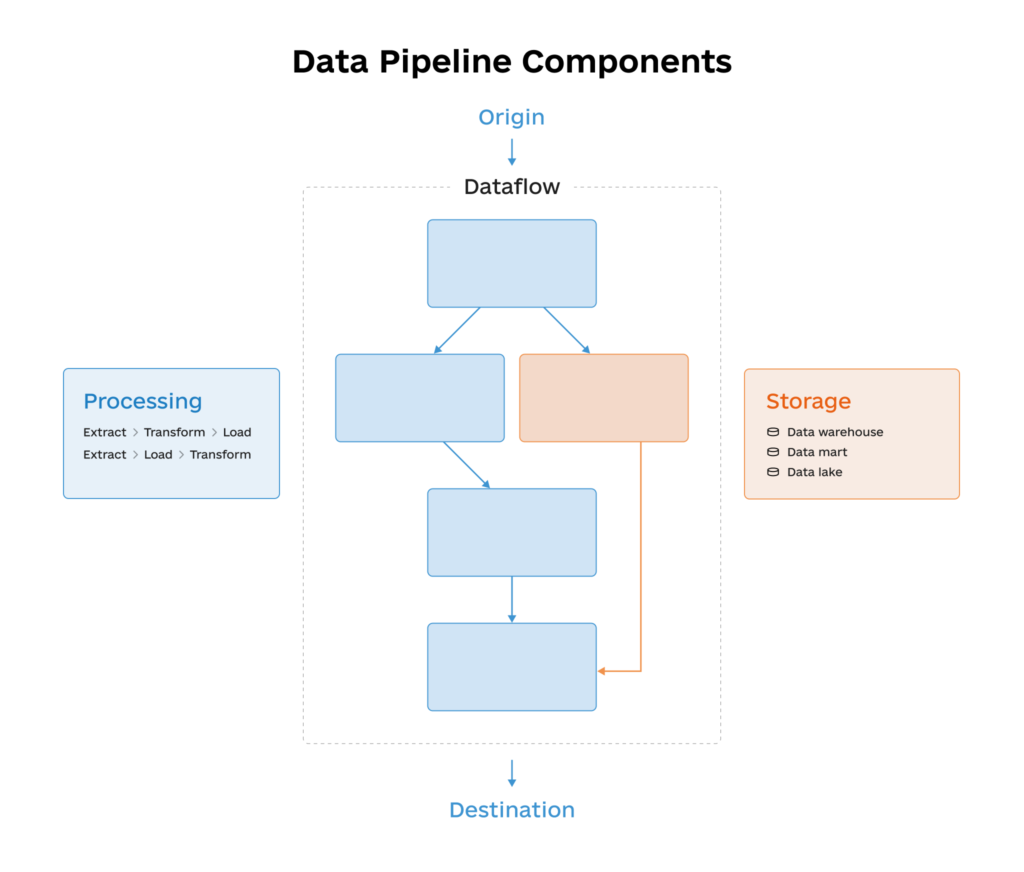
According to ESG Research, automated data pipelines reduce costs and save time. Organizations that use automated pipelines can experience a reduction in coding and preparation time by up to 91%, spend up to 80% less time building pipelines, and save up to 68% on tool costs.
However, the benefits of automated pipelines go beyond just cost and time savings. They also free up data engineers to focus on more valuable tasks. This means that instead of spending time on routine tasks, data engineers can take tasks that are more value-added.
In addition, automated pipelines improve data mobility. This means that data can be moved easily and quickly, which is crucial in today’s fast-paced FinTech environment. By reducing costs, saving time, and improving data mobility, automated data pipelines play their role in maximizing operational efficiency and bringing better business outcomes.
How to Improve Data Utilization and Analysis in FinTech Data Management
In the world of financial technology, data goes beyond mere collection and storage. It’s data analytics that fuels decision-making and ultimately drives business success. The true potential of data can be unlocked only when businesses use and study it effectively.
In this section, we will delve into approaches and best practices to improve data utilization and analysis in FinTech, transforming raw data into valuable knowledge that informs decisions and actions.
Advanced AI Analytics
Advanced analytics in FinTech revolutionizes data handling. It goes beyond basic data analytics and employs advanced algorithms and methods to anticipate future trends and customer behavior.
BlackRock, a renowned asset management company, leverages advanced technology, including big data, data science, and AI tools such as ChatGPT, to revolutionize the FinTech business. This innovative approach empowers BlackRock to identify potential investment opportunities by mining massive datasets, financial indicators, and market trends. It also aids the company in delivering exceptional value to clients by offering tailored solutions.
By utilizing data-driven strategies, BlackRock analyzes historical data effectively, makes informed investment decisions, and continuously optimizes portfolio performance. Techniques such as predictive modeling, machine learning, and AI bring significant advantages to FinTech analytics and help companies like BlackRock develop informed data-driven strategies.
Real-Time Analytics
Real-time analytics is a valuable tool in managing data in the FinTech industry. It provides advantages in diverse areas, including preventing fraud, enhancing customer satisfaction, and boosting operational effectiveness.
For instance, American Express is one of the FinTech companies that harness big data to combat fraud. They use cardholder details, transaction history, and merchant information to develop machine-learning models that detect anomalies and make decisions almost instantly.
According to Allegra Driscoll, a high-ranking executive at American Express, the company embraced AI early on, particularly machine learning, which has been utilized to combat fraud since 2010. This approach enables the company to stay ahead of fraudsters and protect their customers.
J.P. Morgan, a multinational finance corporation, is another example showcasing the effectiveness of real-time analytics in finance technology. For more than two years, they have been using artificial intelligence (AI)-powered language models to screen payments for validation. This measure significantly speeds up processing, minimizes incorrect validations, and optimizes queue handling.
To sum up, real-time analytics are vital for data management in the financial technology industry. They not only address scalability challenges but also transform data into a valuable resource that can inform decision-making and foster business expansion.
Other Important Considerations of FinTech Data Management
Apart from direct measures impacting data collection, storage, analysis, and utilization, let’s explore other important considerations of FinTech data management. We’ll be looking at both the security and ethical aspects, which are crucial when dealing with data in this industry.
Security of FinTech Data Management
Data security determines the quality of services provided to the client, the reliability of operations, and the competitive edge of a FinTech company. This aspect involves several key measures you can adopt in data management:
Encryption: Encryption is a must if you aim to secure your data, from the point of storage to analysis and transmission. This process lies in converting data into a code, especially to prevent unauthorized access.
Access Controls: Access control regulates the access to resources in a computing environment. This security technique enables FinTech companies to control access to data by segmenting authorized individuals based on their roles.
Anonymization: Anonymization helps protect user privacy by removing or masking personal information. The process lies in modifying sensitive data to adhere to privacy laws while enabling its use in software testing and analytics.
Security Audits: You should regularly evaluate the system to identify vulnerabilities and maintain its health. Security audits are systematic evaluations of the security of the data management system by assessing if it aligns with the established standards or criteria.
Implementing data security measures will help you ensure the integrity and confidentiality of data, safeguard user privacy, and maintain system robustness.
Ethicality of FinTech Data Management
In the realm of ethics, FinTech firms must handle customer data responsibly. Here is how you can ensure it:
Fair Use of Data: Introducing practices that prevent discrimination is essential for businesses striving for fair data use. Firms have to set a transparent communication with users, who should possess the full knowledge of collected data and its usage.
Adherence to Ethical Standards: Beyond technicalities, FinTech data management involves protecting security and upholding ethical standards. By adhering to these principles, your company can harness the power of data while safeguarding user privacy and respecting rights.
Summing up, ethical data management is an immediate responsibility of FinTech firms. By ensuring fair use of data and adhering to ethical standards, businesses will maintain transparency and prevent discrimination.
Final Thoughts
This article provides an overview of the general tips and practices applicable to a wide range of FinTech data management challenges. By investing in data management, decision-makers get a 360-degree view of business and can continuously improve their services with regard to changing client demands.
However, to reach maximum effectiveness and develop a robust data management strategy, businesses should center their effort around their specific needs. For this, the help of an experienced software development company will be essential.
8Allocate is a software development partner specializing in FinTech. We help organizations develop and fine-tune trading and digital payment solutions, blockchain apps, online banking solutions, and financial management tools.
Apart from the tailored tech solutions we create, our experts also share effective guidelines and best practices to maximize efficiency, improve risk management, and leverage the full potential of data assets for long-term success.
If you’re among the FinTech companies aiming to navigate the complexities of data management, leave us a note. Our professionals will investigate your business needs and come up with a comprehensive data management strategy that will give you a strategic advantage.
Frequently Asked Questions
Quick Guide to Common Questions
Why is data management critical for FinTech companies?
FinTech companies rely on secure, high-quality data to enhance decision-making, customer experience, and regulatory compliance. Without effective data governance, businesses face inefficiencies, security vulnerabilities, and missed opportunities in an industry where data drives everything from fraud detection to risk assessment.
What are the biggest challenges in FinTech data management?
One of the primary challenges is data silos, where different departments manage data in isolation, limiting visibility and making cross-functional insights difficult. Poor data quality further compounds the issue, as unstructured or inconsistent data leads to inaccuracies in financial modeling. Many FinTechs also struggle with legacy systems that slow down operations and make integration with AI-driven analytics difficult. Regulatory compliance remains a key concern, as financial institutions must continuously adapt to evolving standards while maintaining data privacy and security.
How can FinTech companies overcome data silos and improve integration?
Breaking down data silos requires a centralized data architecture that ensures seamless information flow across systems. Many companies are shifting to cloud-based solutions that provide scalability, interoperability, and real-time data access. Automated data pipelines help streamline data ingestion and processing, reducing inefficiencies and improving decision-making.
What steps can FinTech companies take to improve data quality?
Maintaining high data quality starts with standardization protocols that ensure consistency across datasets. Data validation and real-time monitoring play a crucial role in detecting inconsistencies and preventing errors before they impact financial operations. FinTech companies are increasingly using AI-powered analytics to clean, categorize, and optimize data for predictive insights.
How does AI enhance FinTech data management?
AI-powered solutions automate data governance, fraud detection, and compliance monitoring. Advanced machine learning models analyze vast amounts of structured and unstructured financial data, enabling faster decision-making. Real-time analytics also help companies identify emerging risks, optimize lending decisions, and improve customer personalization strategies.
What’s the role of cloud computing in scalable FinTech data management?
Cloud platforms enable cost-effective, scalable, and secure data storage and processing. They support real-time analytics, automated compliance checks, and AI-driven insights while reducing infrastructure costs. By adopting cloud-native architectures, FinTech firms gain agility in handling large volumes of financial transactions and customer interactions.
How can companies ensure security and compliance while scaling their data operations
Regulatory compliance requires a robust data governance framework that aligns with evolving financial regulations. Security strategies such as encryption, access control, and anonymization protect sensitive data while maintaining transparency. Regular security audits and AI-driven threat detection help prevent fraud and ensure data integrity across financial ecosystems.
How does 8allocate support FinTech companies in optimizing data management?
8allocate provides tailored data management solutions that help FinTech firms centralize their data, improve quality, and implement AI-powered analytics for enhanced risk management and compliance. Our expertise in scalable cloud architectures, real-time data pipelines, and regulatory frameworks ensures that financial institutions can harness data-driven insights while maintaining security and operational efficiency.