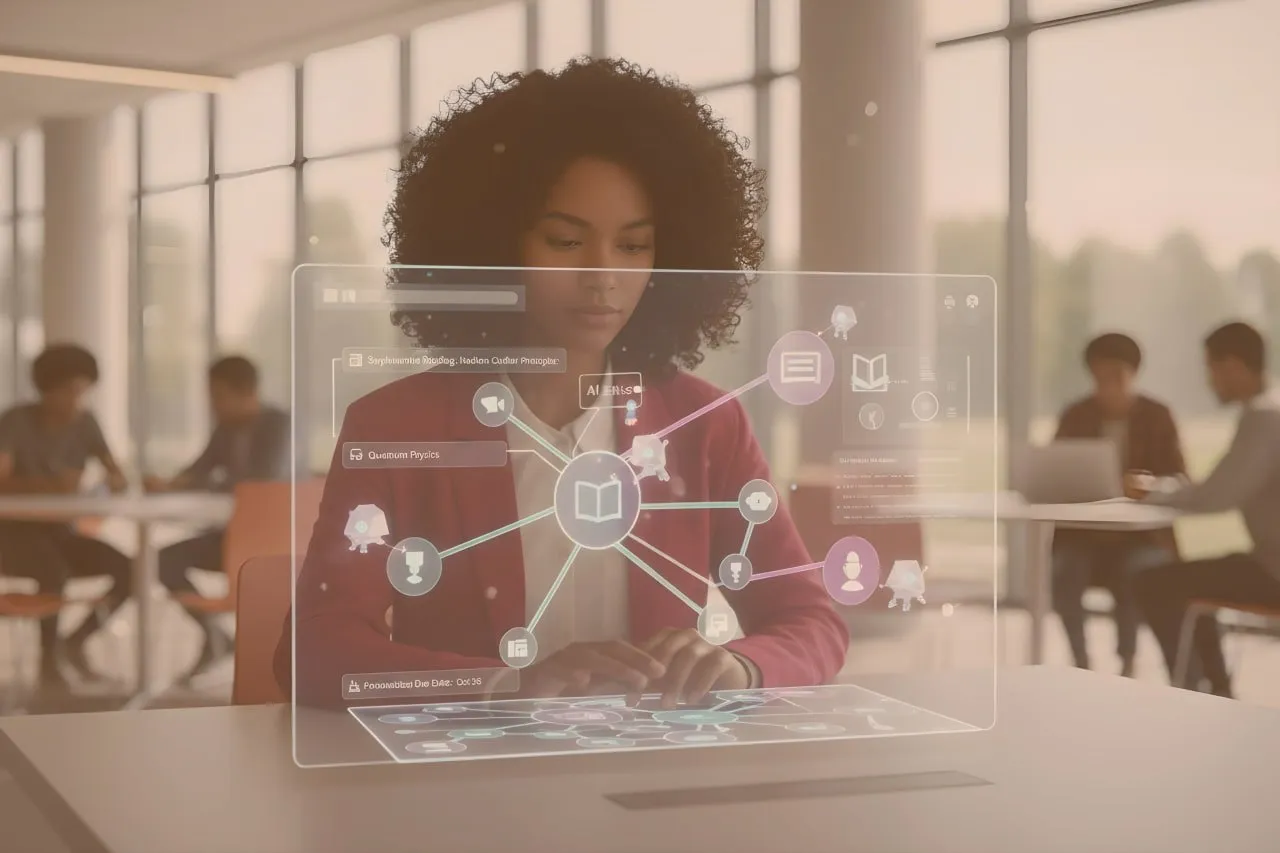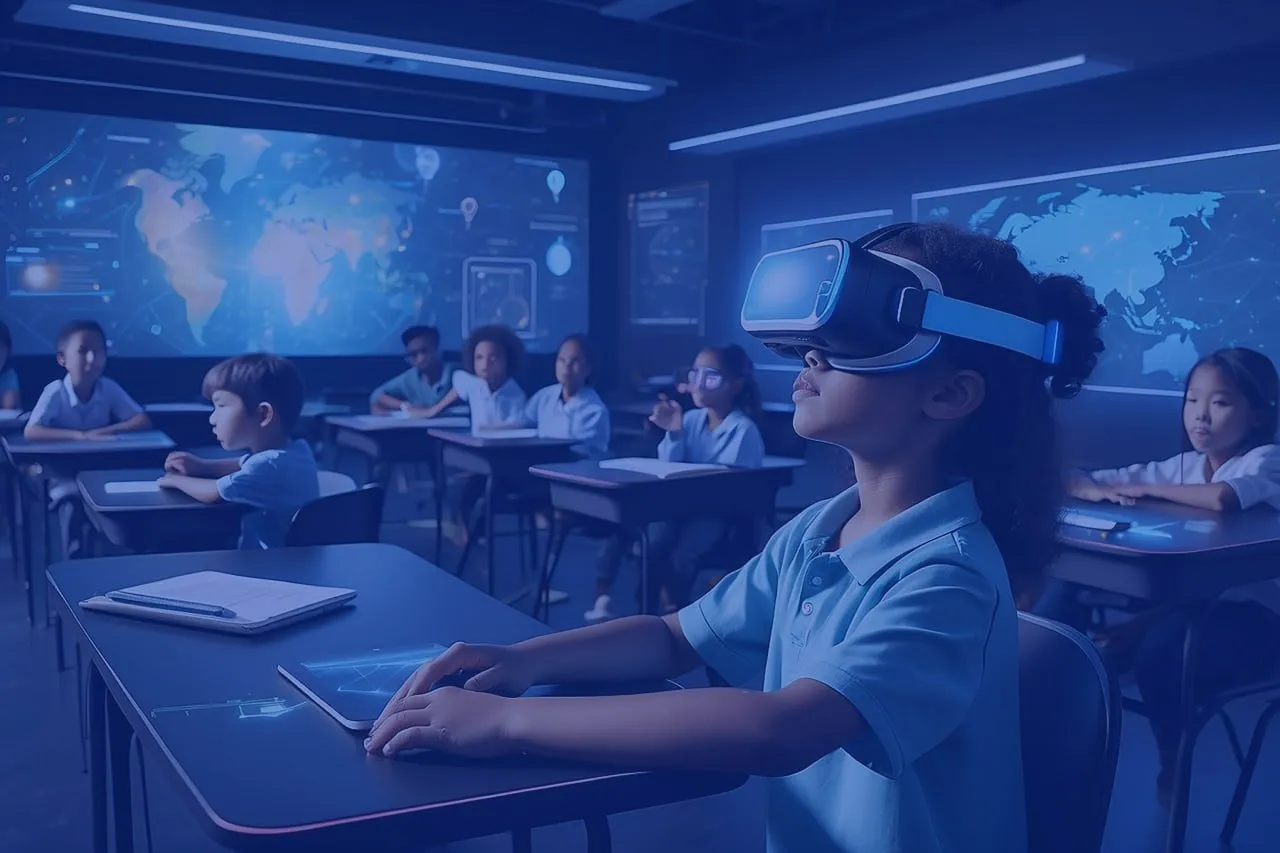
Curious about what immersive educational experiences are and their benefits? Using virtual and augmented reality, these experiences offer interactive environments where learners can deeply engage with educational content. This article delves into strategies, technologies, and their advantages.
Key Takeaways
- Immersive educational experiences leverage VR, AR, and mixed reality technologies to create interactive, multi-sensory learning environments that enhance engagement, retention, and practical skills development.
- Selecting the right technology and designing effective, accessible content are crucial steps in the successful implementation of immersive learning, which focuses on achieving clear learning objectives and minimizing costs.
- The future of immersive learning includes advancements in VR and AR, integration with AI for personalized learning, and expanding access and inclusivity, making education more engaging and effective for all students.
Understanding Immersive Educational Experiences
Immersive technologies, including virtual reality (VR) and augmented reality (AR), create dynamic, multi-sensory learning experiences that allow students to engage with educational material deeply. These immersive environments enable learners to encounter scenarios beyond their reach in the real world.
Immersive learning offers several advantages:
- Interactive Simulations: Learners can engage with realistic simulations, enhancing their understanding through practical application.
- Increased Engagement: The immersive nature of VR and AR leads to higher motivation and engagement.
- Improved Retention: Complex concepts are easier to grasp and retain when experienced in a multi-sensory environment.
- Safe Practice: Students can practice applying knowledge in a controlled, risk-free setting.
- Bridging Theory and Practice: Immersive learning transforms theoretical knowledge into practical skills, closing the gap between knowing and doing.
Transforming abstract theoretical knowledge into tangible, practical applications, immersive learning closes the gap between knowing and doing.
By engaging multiple senses, these technologies accommodate various learning styles, fostering inclusivity and enhancing overall educational effectiveness.
Definition and Scope
Immersive educational experiences utilize technologies such as VR and AR to improve the learning process. This is achieved by:
- Skill Acquisition: Providing opportunities to learn new skills through interactive methods.
- Knowledge Expansion: Broadening the base of knowledge with rich, detailed content.
- Perspective Examination: Allowing students to explore systems and concepts from multiple viewpoints.
- Deep Comprehension: Promoting a profound understanding and greater involvement with the study material.
Benefits of Immersive Learning Environments
Offering significant benefits, immersive learning environments enhance knowledge retention, promote practical skills development, and increase engagement and motivation. By providing engaging, interactive, and personalized learning experiences, these environments stimulate curiosity and promote active participation among students.
Learners can explore virtual worlds, manipulate objects, and complete tasks in a risk-free environment, allowing for experiential learning that deepens their understanding of complex subjects without real-world risks. Additionally, immersive learning environments can reduce the time required for training, as learners can practice and master skills quickly in a simulated setting.
Enhanced Knowledge Retention
Immersive learning environments significantly improve memory retention because they allow learners to:
- Interact with and manipulate tangible objects, which fosters the formation of meaningful memories.
- Perform repeated actions and observe varying outcomes influenced by their choices and responses.
- Feel emotionally involved in the process, which is key for better memory recall and a more profound comprehension.
When learners actively engage with the material in both physical and emotional dimensions, they retain the knowledge gained through immersive experiences more effectively.
Studies have shown that Virtual Reality (VR) can accelerate learning up to four times faster than conventional methods. When VR is used to reconstruct historical events, it boosts students’ memory and involvement. This approach also turns abstract concepts into relatable experiences that are easier for pupils to grasp and remember.
Practical Skills Development
Immersive learning technologies render education more relevant and hands-on by offering contextualized training that mirrors actual conditions. These technologies span the divide between abstract knowledge and its real-world use through lifelike simulations where learners have the freedom to practice without consequence.
In numerous fields, VR (Virtual Reality) and AR (Augmented Reality) are revolutionizing training by boosting productivity, enhancing skills, and minimizing mistakes. Specifically for medical students, VR serves as a tool to safely execute surgical procedures in a risk-free setting—affording them vital practical exposure while circumventing ethical issues associated with practicing on live patients.
Increased Engagement and Motivation
AR and VR technologies present effective instruments for engaging students both in physical spaces and digital platforms. Specifically, the use of VR significantly increases engagement levels, making learners up to 3.75 times more focused on educational material. The immersion provided by VR supplies a learning space free from external distractions, which promotes profound understanding and improved performance.
The immersive learning experience effectively accommodates visual, auditory, and kinesthetic learners through its multidimensional offerings. Integrating diverse instructional methods such as lectures, videos, and participatory exercises within these environments helps to amplify the learning experience—facilitating cooperative efforts and interaction amongst participants. This is how immersive learning adeptly serves various individualized education preferences.
Types of Immersive Learning Technologies
Immersive learning technologies, such as virtual reality (VR), augmented reality (AR), mixed reality (MR), and 360-degree videos, each contribute unique educational experiences. They enable the simulation of real-life activities and provide interactive environments that enhance learner engagement.
For example, learners can explore environments from various perspectives using 360-degree videos to deepen their comprehension and involvement with the subject matter. The addition of haptic feedback devices increases immersion by adding a tactile dimension to these interactive settings, making the experience more lifelike and engaging for users.
Virtual Reality (VR)
The use of virtual reality within eLearning offers:
- Engaging instructional media through captivating virtual environments
- Development of interactive learning opportunities
- Immersion into alternative, digitally created worlds
- Interactions with virtually crafted settings and characters
- Authentic simulations that bolster the development of practical skills and reinforce knowledge retention
Such technology significantly boosts the efficacy of the learning experience.
Augmented Reality (AR)
Within the realm of eLearning, augmented reality involves combining virtual objects and digital data with actual environments. AR merges physical surroundings with either two-dimensional or three-dimensional digital content, thus amplifying traditional learning experiences through the superimposition of virtual features over real-world spaces. This innovative technology offers students:
- Engaging interactive tutorials
- Real-time procedural guidance
- Advancement in practical skills training
- Elevated levels of participation
Mixed Reality (MR)
Mixed reality merges the features of both augmented and virtual reality, integrating digital content into actual environments while enabling interaction with real-world elements. It provides a platform for learners to simultaneously interact with physical spaces and digital entities, fostering interactive learning experiences that are deeply engaging.
Such technology proves to be especially beneficial for collaborative educational activities as it allows participants to engage within a common digital environment.
360-Degree Video
Videos in 360 degrees offer environments that are completely immersive and capable of replicating scenarios and locations from the real world. Such videos enable learners to do the following:
- View surroundings from various perspectives
- Deepen their comprehension and interaction with the material
- Design other educational experiences that are immersive as well as virtual field trips
This technology proves highly efficient, especially when it comes to crafting virtual field trips and additional educational experiences that are immersive.
Implementing Immersive Learning in Education
When it comes to introducing immersive learning into educational environments, a series of essential steps must be taken. These include the choice of suitable technology, development of impactful content, and ensuring both safety and accessibility are prioritized. It is vital that educators set definitive goals for learning to incorporate immersive technologies within education frameworks seamlessly. When picking out the correct technology to use, considerations around the subject matter being taught, resources at hand, and financial constraints all play important roles.
It’s advisable when first employing immersive learning methods to begin with projects that are easy to manage before advancing towards more complex ones. Strategies for smoothly initiating immersive learning include:
- Providing straightforward instructions regarding the usage of equipment
- Setting clear expectations about what will happen during an experience
- Teaching participants how they can opt out if they start feeling uneasy
Maintaining learner safety and comfort should always be emphasized while embracing immersive techniques in education. Enhancing immersion activities with subsequent sessions dedicated to reflection and discussion is beneficial as well. This step reinforces learned material and fosters learners’ critical thinking skills.
Choosing the Right Technology
The selection of suitable immersive technology is dependent on various factors like subject matter, resources, and budget considerations. Educators should view immersive learning as a complement to traditional learning methods rather than a replacement. Understanding the different types of immersive technologies and their potential impact on the curriculum is essential for effective implementation.
Cost-effectiveness and resource allocation are significant considerations when selecting immersive learning technologies. Optimizing resource allocation and managing costs effectively can be achieved by implementing a phased approach to development that focuses on high-impact areas first. This ensures that resources are directed to areas that will generate the most value. Some strategies for cost-effective implementation of immersive learning technologies include:
- Using virtual environments through laptops or tablets as an alternative to expensive VR headsets
- Prioritizing high-impact areas for development
- Conducting thorough cost-benefit analyses before investing in new technologies
By following these strategies, organizations can make the most of their resources and ensure that immersive learning technologies are implemented in a cost-effective manner.
Designing Effective Content
Effective content design hinges on well-defined learning objectives, deep subject matter expertise, and solid instructional architecture. It is crucial for immersive learning material to maintain an equilibrium between the use of technology and the fulfillment of educational aims. To guarantee active learner engagement and the cultivation of practical skills, high-quality immersive content must accurately reflect real-world scenarios.
For crafting engaging and effective learning modules, it’s imperative to involve subject matter authorities. The construction of immersive courses should incorporate robust instructional planning in order to avoid overwhelming learners cognitively while maintaining lucidity and concentration on the intended pedagogical outcomes.
Ensuring Safety and Accessibility
Creating safe and accessible immersive learning environments involves compliance with frameworks such as Universal Design for Learning (UDL) and the integration of assistive tools like speech-to-text features and closed captioning. Immersive learning experiences must cater to various needs and preferences to accommodate different learning styles across all users. Conducting user testing with diverse groups plays an essential role in uncovering and rectifying potential access issues within immersive learning systems.
It’s important to provide lucid instructions and guidelines throughout these environments to avoid learner confusion or irritation. By ensuring that every student can engage completely within immersive learning experiences, we not only boost involvement but also support a culture of inclusiveness while providing equal educational opportunities for everyone.
Case Studies of Immersive Educational Experiences
The use of VR and AR across a range of disciplines is exemplified through tangible instances of engaging educational experiences. K-12 students can explore a variety of subjects, including happiness skills, agricultural practices, and STEM concepts through the Virtual Field Trips created by Discovery Education. These trips enrich learning by making it more interactive and impactful.
An embodiment of this technology’s potential is seen in the Apollo 11 Virtual Reality experience that simulates the historic first moon landing with vivid 3D imagery and sensory feedback for an authentic feel. Labster offers virtual laboratory settings for science instruction with hands-on simulations covering areas such as biology, chemistry, and physics. Collectively these examples underscore how immersive learning technologies are transforming education by offering diverse and effective applications.
Medical Education
The employment of VR technology is particularly advantageous in healthcare training, as it offers medical students the chance to refine their surgical and procedural skills, as well as patient interaction within lifelike virtual environments. This innovative approach significantly improves their educational journey. For instance, Labster’s virtual labs deliver simulations tailored for medical learning that enable students to safely navigate and master complex procedures through a true-to-life representation. Similarly, Jump Simulation’s VR endeavors provide immersive encounters that aid in developing an understanding and proficiency across various competencies.
Interactive applications like the Code Cart App utilize AR to instruct clinicians on pediatric emergency equipment handling through engaging three-dimensional experiences. The surge of interest towards incorporating AR and VR in teaching fundamental topics such as basic anatomy, kinesiology, and bedside manner within health sciences underscores how these cutting-edge technologies are poised to transform the landscape of medical education dramatically.
Historical Events
Immersive technologies have the potential to revolutionize students’ investigation of historical events. Learners can delve into historical sites in an interactive and lifelike fashion by employing Virtual Field Trips. The utilization of 360-degree videos provides an opportunity for students to virtually visit faraway landmarks and significant locations virtually, thereby bringing history to vibrant life within the learning environment.
Egyptologists are taking advantage of 3D modeling techniques to examine ancient inscriptions with a focus on their spatial characteristics and substance. This application serves not only as a research tool, but also enriches the educational experience significantly.
Space Exploration
The Apollo 11 Virtual Reality experience recreates the circumstances and occurrences of the iconic moon landing in 1969, offering an immersive virtual journey to the lunar surface. By using virtual reality for space simulations, these immersive experiences enhance comprehension of space missions while delivering the marvels of space exploration directly into educational settings.
Measuring the Impact of Immersive Learning
Monitoring the efficacy of immersive learning involves analyzing key performance metrics, soliciting evaluations, and refining the system based on quantitative insights. Establishing precise targets from the outset is essential for assessing how successful AR-integrated educational approaches are. It’s important to match Key Performance Indicators (KPIs) with educational objectives to accurately assess their effect on learners.
By documenting performance statistics for later review, it’s possible to evaluate how well knowledge and skills have been retained post-training with augmented reality. The frequency of errors or blunders before and after such training sessions serves as a critical index of its effectiveness. Observing how information is remembered over an extended period provides insight into the sustained influence that AR-augmented education programs may hold. Instructors, trainers, or fellow participants can oversee learner progress in live situations, which facilitates continuous evaluation and responsive feedback mechanisms.
Performance Metrics
Immersive learning has been shown to be crucial in enhancing time to competency, bolstering knowledge retention, and minimizing errors. For instance, integrating VR into training regimens can halve the duration needed for specific medical instructions—this was observed with arrhythmia detection sessions at OSF HealthCare where a 50% reduction was noted. When engaging in surgical practices within virtual reality settings, medical students exhibited an impressive improvement of up to 83% in completing their tasks more quickly.
Evaluating augmented reality (AR) learners alongside those who have undergone conventional educational methods is essential for gauging improvements in achieving competency more rapidly. To ascertain AR solutions’ impact on maintaining learned information over time effectively. It’s important to test learners immediately after instruction as well as several weeks later. Within safety education contexts specifically, a measure of success can be inferred from observing reductions in workplace incidents following completion of AR training programs. Keeping track of how satisfied and engaged participants are during the learning process provides valuable qualitative feedback regarding the overall efficacy and reception of immersive AR educational experiences.
Feedback and Improvement
Collecting learner feedback is essential for the ongoing enhancement of immersive learning experiences. By utilizing surveys to obtain qualitative responses, it’s possible to evaluate augmented reality (AR)-augmented education against past iterations that did not employ AR. To assist both teachers and students, it may be beneficial to incorporate analytics and feedback mechanisms into immersive learning initiatives for monitoring advancement.
Utilizing this feedback allows for critical modifications in the immersive learning curricula. Educators can perpetually improve and advance the learning experience with input from users, guaranteeing that immersive learning continues to captivate and effectively educate all participants.
Overcoming Challenges in Immersive Learning
Overcoming hurdles in immersive learning calls for addressing financial restraints, technology barriers, and the need for training and support. Here are several tactics to tackle these challenges.
- Detailed budget management and finding cost-effective options are crucial due to the significant costs related to developing and deploying immersive technologies.
- Undertake an exhaustive analysis of costs versus benefits to pinpoint solutions that offer value without exorbitant expenses.
- Investigate affordable development tools and platforms capable of providing high-caliber immersive experiences.
- Pursue partnerships within the industry, which can aid with funding and backing your efforts.
Learner resistance stemming from a reluctance towards change can be a barrier when adopting immersion in learning scenarios. To navigate this issue consider employing strategies such as:
- Sharing success stories through case studies illustrating positive outcomes
- Initiating small-scale pilot programs that showcase how beneficial immersing learners into simulated worlds can be
- Guarantee device compatibility across different hardware specifications along with varying internet connectivity standards, alleviating technological limitations
- Prioritize making sure every student has equal access
In following these suggestions, it’s possible not just to mitigate opposition but indeed gain traction with successfully implementing expansive real-world adoption of inclusionary, all-encompassing learning engagements.
Cost and Budget Constraints
To handle cost and budget limitations, conducting a cost-benefit assessment, utilizing inexpensive development resources, and forming partnerships within the industry are effective strategies. The expenses associated with incorporating immersive technologies encompass both hardware acquisition and content creation costs.
- Prices for VR headsets span from $300 to more than $2,500
- AR glasses may reach up to $3,500 per pair
- Costs for developing content can also significantly differ. While pre-made training materials start at around $50, bespoke applications can require an investment ranging from several thousand dollars to millions.
By adopting immersive technologies, significant savings can be achieved through:
- Decreasing dependence on tangible assets and instructional personnel
- Cutting down on costs related to travel and securing locations for educational events
- Reaping indirect advantages such as heightened efficiency in work performance
Technological Limitations
For immersive learning to be successful, it is crucial that there are sufficient investments made in the necessary technology and robust network connectivity, as they form a core part of the required hardware and infrastructure.
It is also important to make certain that this educational approach is compatible across different devices and adaptable to various levels of internet access. This inclusivity helps overcome potential barriers related to technological constraints, thus making immersive learning accessible for every student.
Training and Support
Educators can maintain their edge in the evolving field of immersive learning by engaging in ongoing Professional Development (CPD). Essential training for educators involves:
- Acquiring a strong knowledge of immersive technologies
- Comprehending the advantages and possibilities they present
- Working alongside specialists and colleagues to create content tailored to students’ requirements
Offering sufficient training along with access to internal champions can underscore the importance of immersive learning and promote an innovative mindset. When armed with proper backing and tools, teachers are well-equipped to integrate immersive learning techniques, thereby enriching the educational journey for learners.
Future Trends in Immersive Educational Experiences
With rapid advancements in VR and AR technologies, AI integration, and expanding access and inclusivity, the future of immersive educational experiences looks promising. The rapid progress of digital technologies opens up new opportunities for using AR tools in educational contexts. Immersive technologies are increasingly being used in higher education in countries like Russia and Kazakhstan.
Game-based learning and esports are expected to continue growing, with schools investing more in creating comprehensive esports spaces. These trends indicate a future where immersive learning is more accessible, inclusive, and effective, providing students with engaging and impactful educational experiences.
Advances in VR and AR Technologies
Educational environments are expected to embrace augmented reality (AR) and virtual reality (VR), providing students with deeper immersive learning opportunities. These technologies are being rapidly integrated into higher education, especially within research sectors, and are also being extended to instructional use. With AR and VR equipment becoming more user-friendly, lightweight, and affordable, there is a surge in experimental projects throughout institutions of higher education.
Such advancements in technology are making immersive learning tools readily available for classroom use, significantly enriching learners’ educational experiences.
Integration with Artificial Intelligence
Integrating AI with immersive technologies facilitates personalized and adaptive learning experiences, enhancing contemporary immersive learning by enabling cognitive tasks similar to human functions, such as problem-solving and acquiring knowledge. This evolution signifies a shift from the standardized approaches of Education 3.0 towards the flexible, individual-centric methods characteristic of Education 4.0.
Technologies such as Natural Language Processing (NLP) and machine learning are instrumental in developing bespoke educational settings that cater to the distinct requirements of every learner. Employing AI-driven frameworks along with ready-to-use simulation modules can reduce upfront costs associated with immersive technologies, thereby expanding accessibility while also being economically advantageous.
Expanding Access and Inclusivity
Immersive technologies can greatly widen access and inclusion within education by providing immersive learning experiences. Participation in immersive learning environments can more fully involve students with disabilities in both the learning process and professional endeavors. These technologies’ creation of accessible and engaging educational experiences is key to boosting learner engagement, thus guaranteeing that every student has an equal chance at success.
Summary
Immersive learning experiences, facilitated through VR, AR, MR, and 360-degree video technologies, present significant opportunities for enhancing education. These mediums improve engagement and motivation and elevate knowledge retention and practical skills development. By adopting immersive educational practices tailored to various learning styles, you can foster engaging and efficient instructional settings.
The prospects for immersive learning are promising due to ongoing advancements in VR and AR technologies coupled with their integration with AI and increased accessibility and inclusivity. Educators who leverage these evolving trends will equip students effectively to tackle future challenges. Immersive learning represents more than an anticipated shift in education—it is a current opportunity to enrich learner experience across diverse educational landscapes.
Ready to elevate your educational technology? Contact us today to explore how our tailored solutions can help you achieve your goals.