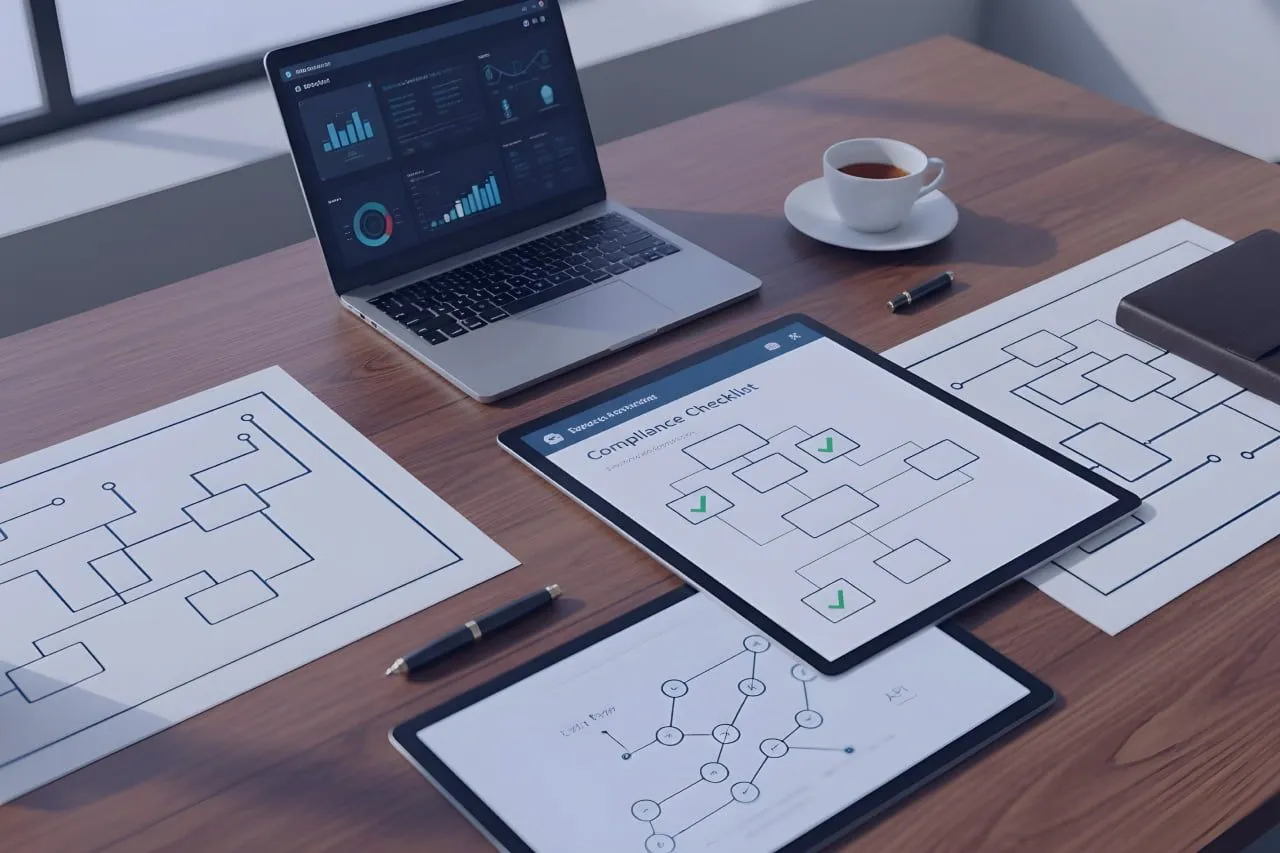
AI automation for universities and EdTech is transforming higher education, but it also raises FERPA and AI in education compliance challenges from data privacy to auditability. For CIOs and compliance officers, integrating AI tools means navigating U.S. FERPA rules and Europe’s GDPR simultaneously. This practical checklist explains what changes with AI, how to map data flows and conduct DPIAs, lock down access and logging, grill your vendors on privacy, and finalize a go-live compliance review. The goal: deploy educational AI solutions on a trusted, governed data foundation so your institution stays audit-ready and AI-ready.
What changes with AI
Deploying AI in an educational environment changes the data landscape and risk profile. Traditional student information systems (SIS) and learning management systems (LMS) were largely self-contained; by contrast, AI-powered tools (from intelligent tutoring systems to predictive analytics) often pull data from multiple sources and may rely on cloud services or third-party models. This means more data in motion – potentially including personal and sensitive student information – and new data uses that FERPA or GDPR weren’t explicitly written for. For example, an AI that analyzes student performance might generate new records (e.g. risk scores or personalized feedback) that become part of an education record, thus falling under FERPA. Likewise, an AI assistant might process personal data in ways that qualify as profiling under GDPR, triggering transparency and fairness obligations.
We’ve seen institutions struggle most when AI pilots bypass IT governance—a faculty member adopts a chatbot for office hours, or a department buys an analytics tool, each creating untracked data flows. Centralizing AI deployment through your IT/compliance office prevents this “shadow AI” problem.
AI also expands who handles your data. A university’s internal systems might now integrate with external AI APIs or cloud platforms. Under FERPA, any vendor handling education records must function as a “school official” with a legitimate educational interest, bound by contract to FERPA rules. Under GDPR, if AI providers process student or staff data, you must establish clear controller–processor relationships and ensure processing agreements are in place. Essentially, AI adoption broadens the data ecosystem, requiring tighter vendor governance and contractual safeguards.
The regulatory scrutiny is rising as well. Europe’s forthcoming AI Act classifies many educational AI systems as “high-risk,” requiring risk management and compliance measures beyond GDPR. In the U.S., regulators emphasize that using AI must not compromise student privacy rights. In short, adding AI means treating university operations as governed business workflows, where AI for business operations optimization principles apply before the first model goes live. Fortunately, you don’t need to rip-and-replace legacy systems to achieve this. By taking an integration-first approach and using AI agents and co-pilot development patterns, institutions can unify data without duplication, enforce consistent controls, and lay a compliant foundation for AI innovation.
Data flows & DPIA
Map out data flows comprehensively before deploying AI. Start by sketching how each piece of student data enters, moves through, and leaves the AI solution. Identify data sources (e.g. LMS, enrollment database, learning apps) and destinations enabled by robust SIS and LMS integration, including AI algorithms, analytics dashboards, and cloud storage. Document each transfer, including any data leaving your secure environment for an external AI service. This exercise isn’t just good practice – under GDPR, it’s often mandatory. If your AI project is likely to impact privacy (e.g. profiling students or processing at scale), you must perform a Data Protection Impact Assessment (DPIA) to identify and mitigate risks. In an education context, a DPIA should evaluate risks like re-identification of anonymized data, unintended bias affecting protected groups, or potential FERPA violations if outputs are misused.
Crucially, apply data minimization and purpose limitation when mapping these flows. For each data element the AI uses, ask: “Is this strictly necessary for the intended educational purpose?” Limit data collection and retention accordingly. For instance, an AI tutoring system might not need full student IDs or birthdates to personalize lessons – a unique internal token could suffice. Under GDPR’s purpose limitation principle, don’t use student data for any new purpose (like AI model training) without ensuring it’s compatible with the original purpose or obtaining consent. Under FERPA, avoid using or disclosing education records beyond the defined “school official” function of the AI tool.
Next, ensure strong data protection controls at every stage of the flow. As you map storage and processing points, verify that encryption is enforced for data at rest and in transit. For example, enable database encryption for stored records and use TLS for any data sent to a cloud AI service. Mark personal data that will be sent off-site and consider additional safeguards: if using a U.S.-based AI cloud with EU student data, implement GDPR transfer mechanisms like Standard Contractual Clauses (SCCs) and turn on EU data residency options if available.
Don’t forget data deletion and retention in your flow diagram. Define how long AI-generated insights or student model outputs will be kept, and set automatic deletion triggers once they’re no longer needed. For example, you might purge AI training datasets at semester’s end or anonymize logs after 1 year. FERPA doesn’t prescribe specific retention periods, but it does require allowing students to request record amendments, so your system should be able to locate and update any student-related data it holds. GDPR explicitly mandates not keeping personal data longer than necessary, so include retention limits for any personal data the AI system processes. A living data flow diagram (updated as your AI evolves) is a great governance artifact – it keeps everyone from IT to legal on the same page about where data goes.
Data standards in FERPA AI education deployments
To streamline data mapping and integration, leverage education data standards where possible. For instance, the 1EdTech Learning Tools Interoperability (LTI) standard enables secure, token-based connections between your LMS and external AI tools. LTI ensures that when a student or teacher launches an AI plugin, only the necessary identity and context data (like role and course ID) are shared, reducing ad-hoc data exports. Similarly, OneRoster can be used to securely exchange roster and grade data between your SIS and the AI system. By using standards, you not only save integration time but also contain data flows to what’s needed and centralize control. Your goal is an audit-ready integration: any data leaving your environment is documented, minimal, and protected according to a known standard.
On the compliance side, follow Privacy by Design principles (which GDPR elevates in Article 25). That means building these AI data pipelines with privacy features from day one – encryption, access controls, masking of identifiers, and so on – rather than bolting them on later. If you address data flows and DPIA thoroughly, you’re not just avoiding penalties; you’re enabling your AI to operate on high-quality, trusted data. This integration-first groundwork is what makes advanced AI use cases (predictive analytics, adaptive learning, AI tutors) sustainable at scale.
Access control & logging for FERPA AI education systems
With data mapped and risks assessed, the next checklist item is locking down access to both data and the AI system itself. FERPA’s core mandate is that only authorized individuals with a “legitimate educational interest” should access student records. In practice, this translates to Role-Based Access Control (RBAC) for your AI application. Define roles (e.g. instructor, department chair, system admin) and align permissions so users only see the minimum student data necessary for their role. For example, an AI analytics dashboard might show an instructor only their own class’s aggregate performance, whereas an administrator could view department-level trends – but no one should be pulling up an individual student’s information unless it’s part of their job function. A common pitfall: institutions configure role permissions in the AI tool but forget to audit what the underlying database allows. We recommend quarterly access reviews where someone from outside IT spot-checks whether a test “instructor” account can actually reach student records it shouldn’t. Implement multi-factor authentication (MFA) for any access to sensitive AI data or config, especially for admins, to prevent account compromises. These measures uphold FERPA by technically enforcing that “legitimate interest” standard, rather than relying on policy alone.
Just as critical is a robust logging and audit trail. Every interaction with the AI system that involves student data should be recorded. At minimum, log who accessed or contributed data (user ID and role), when (timestamp), what they did (viewed report, updated model, exported data, etc.), and which records or dataset were involved. Centralized logging can capture events like user logins, data uploads, model runs, and results viewing. Configure alerts for anomalies – e.g. if an instructor account suddenly attempts to pull an entire student database, or if there are repeated access attempts outside normal hours. These logs are your first line of defense for detecting unauthorized access or misuse, and they’re invaluable for demonstrating compliance. In a GDPR context, detailed logs support the accountability principle (showing regulators you have control of your data), and they feed into incident response if something goes wrong.
To illustrate, a good practice is establishing an audit log review routine. Have your IT security team or Data Protection Officer (DPO) review privileged access logs and random samples of user activity logs on a schedule (e.g. weekly for critical systems). If your AI system makes automated decisions about students (like flagging at-risk students), log the inputs and outputs of those decisions too – this supports explainability and fairness reviews. In short, log everything that matters: data access, changes to algorithms or models, consent capture events, data deletions, and configuration changes. A well-designed audit trail can even become a competitive advantage, as it builds trust with stakeholders (you can prove who did what, when).
Finally, restrict and monitor administrative access to the AI infrastructure itself. Ensure that system accounts or API keys that could pull large datasets are tightly controlled and rotated. Apply the principle of least privilege across databases, storage buckets, and model management tools. And make sure your logging itself is tamper-proof – store logs in append-only format or off-site SIEM (Security Information and Event Management) systems, so an attacker or rogue admin cannot cover their tracks. These security fundamentals (many align with ISO 27001 controls) underpin both FERPA and GDPR compliance by safeguarding against breaches. Remember, you can’t protect what you don’t monitor. Comprehensive access controls combined with continuous monitoring give you the needed visibility to enforce privacy and address issues proactively.
Go-live checklist
Before turning on any AI system in production at your institution, run through a final compliance go-live checklist. This is your assurance that all the pieces are in place for a responsible, audit-ready deployment:
Data flows documented & DPIA complete
You have an up-to-date data flow diagram and (if required under GDPR) a completed DPIA with risks addressed. All personal data collected by the AI is accounted for, with a clear purpose and legal basis. Mitigations for identified risks (encryption, minimization, etc.) are implemented.
Access controls & encryption in place
RBAC rules have been configured so users only see what they should. Admin accounts are secured with MFA. Student data is encrypted at rest and in transit using strong protocols. You’ve also set up environment hardening (firewalls, API keys, etc.) so the AI system can’t be a backdoor into sensitive data.
Logging, audit trail & monitoring active
Logging is turned on for all critical events – logins, data access, changes, and exports – creating a detailed audit trail for education AI usage. Alerts/monitoring are tuned and someone is assigned to watch them. You’ve tested that logs capture the needed info (try a test user action and see if it is recorded).
Policy updates & training done
Your privacy policies, FERPA annual notification, and any GDPR privacy notices have been updated to cover the AI’s data use in plain language. If needed, you’ve obtained consent from students or parents for using their data in the AI tool (e.g. if not covered by “school official” exception or if it’s an optional service). Staff have been briefed on do’s and don’ts (e.g. not to input unnecessary personal info into prompts, etc.). You’ve documented these communications.
Vendor contracts & SLA set
Legal has signed off that all vendor DPA contracts and FERPA clauses are in place. The vendor provided satisfactory answers to your due diligence questions. You have a point of contact at the vendor for any issues, and you know how to reach them quickly. The service level agreement (SLA) meets your requirements (e.g. uptime, support response times) to avoid disruptions that could impact students.
Incident response ready
You have an incident response plan specifically covering the AI system – including how to disconnect it if it misbehaves, how to contain a data leak, and whom to notify (regulators, affected individuals) and when. Everyone on the incident team knows their role, and you’ve run at least a tabletop exercise. Backups or fallbacks are arranged in case the AI system must be pulled offline.
With these checks complete, you’re ready to deploy the AI solution. But remember, compliance is an ongoing process, not a one-time box to tick. Plan for periodic reviews – schedule a post-implementation audit after a few months, and make compliance monitoring part of your operational routine. As AI features evolve or new data sources are integrated, loop back to the top of this checklist. By embedding these practices into your AI projects, you ensure that innovation doesn’t outrun governance.
In summary, FERPA and GDPR compliance for AI in education is achievable with upfront planning and steady oversight. By unifying data through integration, baking in privacy by design, and insisting on accountability (both internally and from vendors), you create a launchpad for AI initiatives that are both transformative and trusted. The payoff is not just avoiding fines – it’s building confidence among students, parents, and faculty that AI will be used ethically and securely to enhance education outcomes.
Based on deployments across research universities and community colleges, institutions that follow this checklist typically achieve production AI deployment in 90-120 days, versus 12+ months for those who discover compliance gaps mid-project. Early governance investment compresses overall timelines and mirrors proven AI efficiency for enterprises achieved through structured AI adoption.
Contact us to assess your institution’s AI deployment plans and outline a 45-day integration + AI pilot. As an AI solutions development partner, 8allocate can help you integrate AI responsibly into your ecosystem – from data strategy to compliant development – so you can innovate faster with peace of mind.

FAQ: FERPA & GDPR Compliance for AI in Education
Quick Guide to Common Questions
How do FERPA and GDPR differ when using AI in education?
FERPA is a U.S. law protecting student education records, focusing on who can access or share those records. GDPR is an EU regulation covering all personal data with stricter requirements (consent, data minimization, etc.). When using AI, FERPA mainly restricts unauthorized disclosures of student info (e.g. ensuring AI vendors qualify as “school officials”), while GDPR adds obligations like conducting DPIAs, honoring data subject rights (access, deletion), and having a legal basis for processing. Institutions handling international students might have to comply with both sets of rules.
The trickiest overlap we encounter: GDPR’s “right to erasure” versus FERPA’s record retention requirements. When an EU student requests deletion of their data from an AI system, you must balance GDPR’s 30-day compliance window against any legitimate FERPA or accreditation retention needs. We help institutions document these legal basis exceptions upfront so deletion requests don’t trigger compliance panic.
Do we need student or parent consent to use AI tools on student data?
It depends on the context. Under FERPA, schools can generally use student data with AI tools under the “school official” exception without individual consent, provided the vendor is performing an institutional service and is under your control (contractually). However, if the AI tool isn’t covered by FERPA’s exceptions (for instance, a third party using student work for its own purposes), you’d need consent. Under GDPR, you need a lawful basis – which could be consent or legitimate interests or public task. For minors, GDPR would typically require parental consent if consent is the basis. As a best practice, be transparent: inform students/parents how AI is used, and get consent if in doubt or if required by your policy.
Our approach: draft parent/student notifications and consent flows (if needed) during vendor selection, not after contracts are signed. Also, don’t over-rely on consent as your legal basis—if a student withdraws consent mid-semester, can your course still function? For core academic AI tools, “legitimate interest” or “public task” bases are often more sustainable under GDPR than consent.
What is a Data Protection Impact Assessment (DPIA) and when is it required for education AI?
A DPIA is a systematic risk assessment required by GDPR for processing likely to result in high privacy risks (like profiling or large-scale use of sensitive data). In education AI, you should do a DPIA if your AI system profiles students (e.g. predicts performance), processes children’s data at scale, or uses novel tech. The DPIA will map data flows, identify risks (e.g. bias, data leaks), and recommend safeguards. Even outside GDPR, a DPIA-like approach is wise – it’s essentially a privacy and security review of the AI. Regulators and best practices (e.g. EDUCAUSE) increasingly recommend DPIAs for any significant AI in education to ensure you’ve mitigated risks before launch.
In our experience, the DPIA becomes your master deployment document—IT, legal, and academic leadership all reference it. We template DPIAs for common education AI scenarios (tutoring systems, early-alert analytics, proctoring tools) so institutions don’t start from scratch. A well-documented DPIA also protects you if regulators come asking questions; you can demonstrate due diligence from day one. See the “Data flows & DPIA” section in our deployment checklist above for the step-by-step process.
How can we ensure our AI vendor is FERPA-compliant and won’t misuse student data?
The surest way is through due diligence and a strong contract. Vet the vendor with detailed privacy and security questions (encryption, access controls, compliance policies, data reuse, etc.). Require that the contract designates them as a “school official” under FERPA, meaning they:
- Use the data only for the purposes you authorize (no secondary use for their own AI model training without permission).
- Will not disclose the data further without consent.
- Are under your direct control regarding data handling (e.g. you can request deletions).
Also include a breach notification clause. You can ask for provisions that explicitly forbid selling data or using it to improve their product for others. Essentially, treat student data like highly sensitive info – a good vendor will be familiar with these requirements and agreeable to them.
What specific logs should we keep for AI tools to meet audit requirements?
At minimum, keep user activity logs and system logs that record: who accessed the AI tool, when, and what they did. For example:
- User login and logout times (with user ID and role).
- Data access events (e.g. user X viewed prediction results for student Y at time Z).
- Data modification events (if the AI writes back into any student record or if staff correct data).
- Administrative actions (configuration changes, model updates, permission changes).
- Any data exports or reports generated.
Ensure timestamps and identifiers are accurate, and protect these logs from tampering. These audit logs demonstrate compliance (FERPA requires controlling access, and logs prove you did) and are invaluable if you need to investigate an issue or respond to a legal query. They should be retained as long as policy dictates (consider a year or more, depending on regulatory guidance). In case of an incident, regulators may ask for log evidence, so having a comprehensive audit trail is part of being audit-ready.
The most common audit gap we see: institutions log user access but forget to log the AI’s automated decisions. If your AI flags at-risk students or auto-adjusts learning paths, log the inputs (which data points the model used) and outputs (the prediction/decision) for each action. This decision-logging is critical for bias audits and explainability reviews. We recommend centralized log management (SIEM) with alerting for anomalies—such as an instructor account suddenly exporting 10,000 student records. Plan for log retention of at least 1-2 years for FERPA environments; GDPR jurisdictions may allow shorter retention if documented. See our “Access control & logging” checklist section for implementation details.
What’s the biggest compliance mistake institutions make when piloting AI?
Shadow AI deployments. Faculty or departments adopt AI tools directly—chatbots for office hours, grading assistants, analytics dashboards—bypassing IT and legal review entirely.These “stealth” tools create enormous liability: they may be exfiltrating student data to vendor clouds with no DPA in place, or storing personal information in violation of data residency rules.
The fix: institute a centralized AI approval workflow. Before any AI tool touches student data, it must pass through IT/compliance for a lightweight risk triage. Low-risk tools (e.g., public-facing chatbots with no PII) get fast-tracked; high-risk tools (anything processing grades, demographics, or learning behavior) go through the full DPIA and vendor vetting process outlined in our deployment checklist. This governance gate adds only 1-2 weeks for most tools but prevents the 6-12 month cleanup projects we’ve seen when shadow AI is discovered during an audit. Communicate the policy clearly: “We want to enable AI innovation, and this process ensures we can do it safely and quickly.”